

Inturai Ventures Corp. has announced that Inturai DomeCommand, the drone swarm command and control platform tied to a proposed acquisition the company disclosed earlier this year, has been selected for SDTH 2026. The Vancouver based firm, which trades as URAI on the Canadian Securities Exchange, URAIF on the OTC market and 3QG0 in Frankfurt, said the platform made it into a highly selective first wave drawn from more than 450 applicants. SDTH 2026 is a three month fast track defence commercialisation program based in Singapore, built to move promising defence software from the demonstration stage toward something armed forces can actually buy.
Work on the platform during the program will be carried out with the European Defence Tech Hub and the Republic of Singapore Air Force. The wider partner network attached to SDTH 2026 includes DSTA, DSO National Laboratories, ST Engineering, NUS Enterprise, TUM Venture Labs, Accenture, Cognition and Shield AI. Across the three months, the systems chosen for the program are prototyped, put through testing and pushed toward a procurement ready form, with routes into incubation, milestone funding, testbeds and senior defence networks. The program finishes with the main SDTH event, scheduled for September 25 to 27, 2026.
Inturai DomeCommand Enters the Little Red Dome Counter Drone Mission
Within SDTH 2026, development of the platform sits inside Little Red Dome, the layered counter drone mission the program has set up to detect, decide and defeat drone swarms along with other advanced aerial threats. That framing matters because it places the software in a role much of the market has left underdeveloped. Other firms have taken different routes into military evaluation, including a counter-drone research agreement signed with the U.S. Army, but the money spent in this field still flows mostly toward sensors that spot an incoming aircraft and effectors that bring it down. The layer that ties everything together receives far less attention.
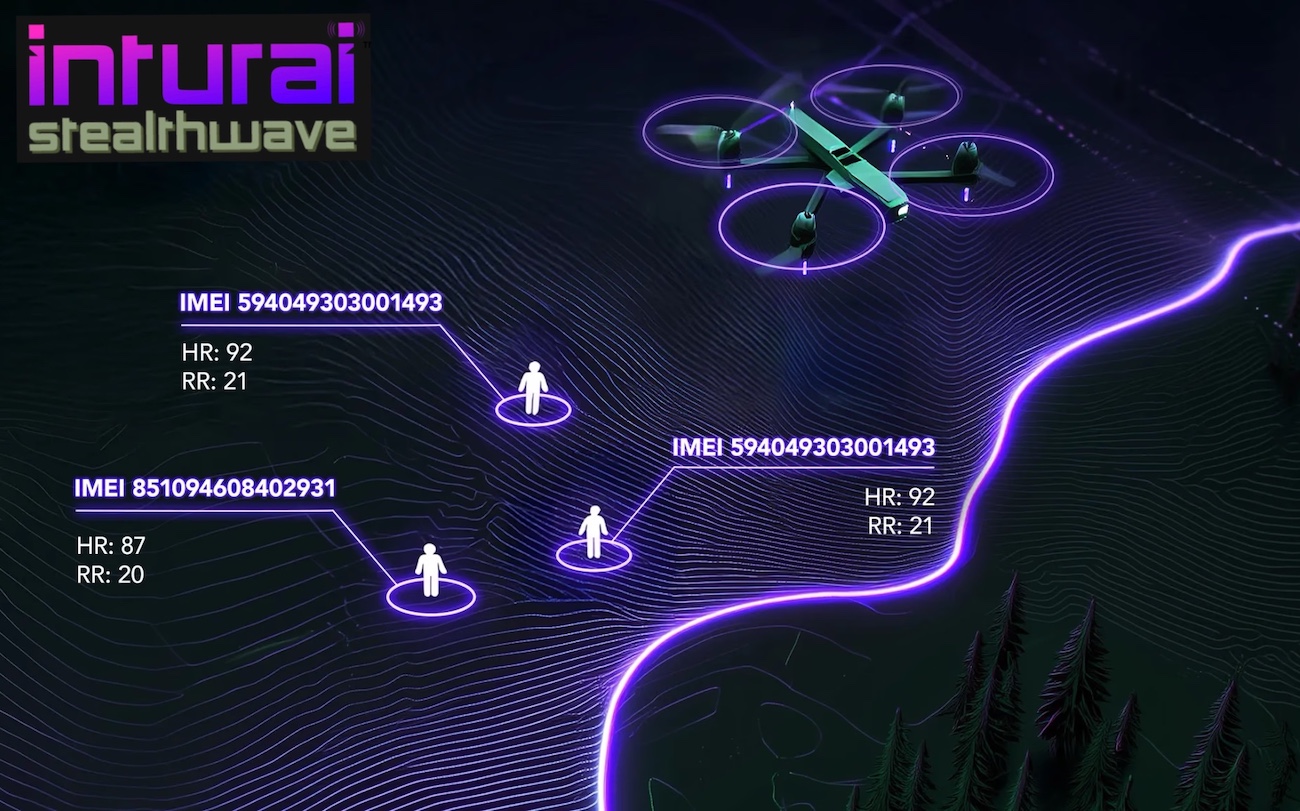
Inturai describes that middle layer, known in defence circles as command and control or C2, as thinly served. It is the software that takes raw detection data from multiple sources and turns it into a coordinated response rather than a pile of alerts. The company plans to pair Inturai DomeCommand with its own defence grade spatial sensing, a capability that reads threats in contested and cluttered environments where cameras struggle. Inturai has built its wider business around this kind of sensing, and its national security work sits alongside healthcare and industrial uses. The combination, according to the company, leaves it in a rare greenfield position away from the crowded and capital heavy drone hardware market.
“Developing DomeCommand alongside the European Defence Tech Hub and the Republic of Singapore Air Force compresses years of defence market entry into months. The C2 layer is the gap in the counter-drone market, and this program fast-tracks it toward the operators who will buy it. We intend to convert this into pilot deployments across defence and critical-infrastructure markets.” Ed Clarke, CEO of Inturai Ventures Corp.
Airports, Ports and Power Grids Give the Platform a Second Market
The same capability is aimed at protecting national critical infrastructure. Airports, power grids, ports and correctional facilities are all dealing with a rise in drone incursions, and the operators running those sites need to detect a threat, decide what to do and respond within seconds rather than minutes. Inturai says its combined sensing and command and control platform is designed to handle that entire sequence as a single system instead of a stack of separate tools that staff have to stitch together under pressure.
That dual use framing gives the company two adjacent markets to chase from one product line. Defence customers and infrastructure operators face versions of the same problem, even though their procurement paths and budgets look very different. For a small listed company, the appeal of the SDTH 2026 route is speed, since a structured program with military partners can compress the years it normally takes to reach defence buyers into a few months of concentrated work.
Inturai has said it will provide further updates on both the proposed acquisition and the program as milestones are reached. The acquisition has not closed, so the selection is a step in the development of the platform rather than a completed deal or a purchase order. The main SDTH event in late September will be the next visible checkpoint for anyone tracking the work.
