

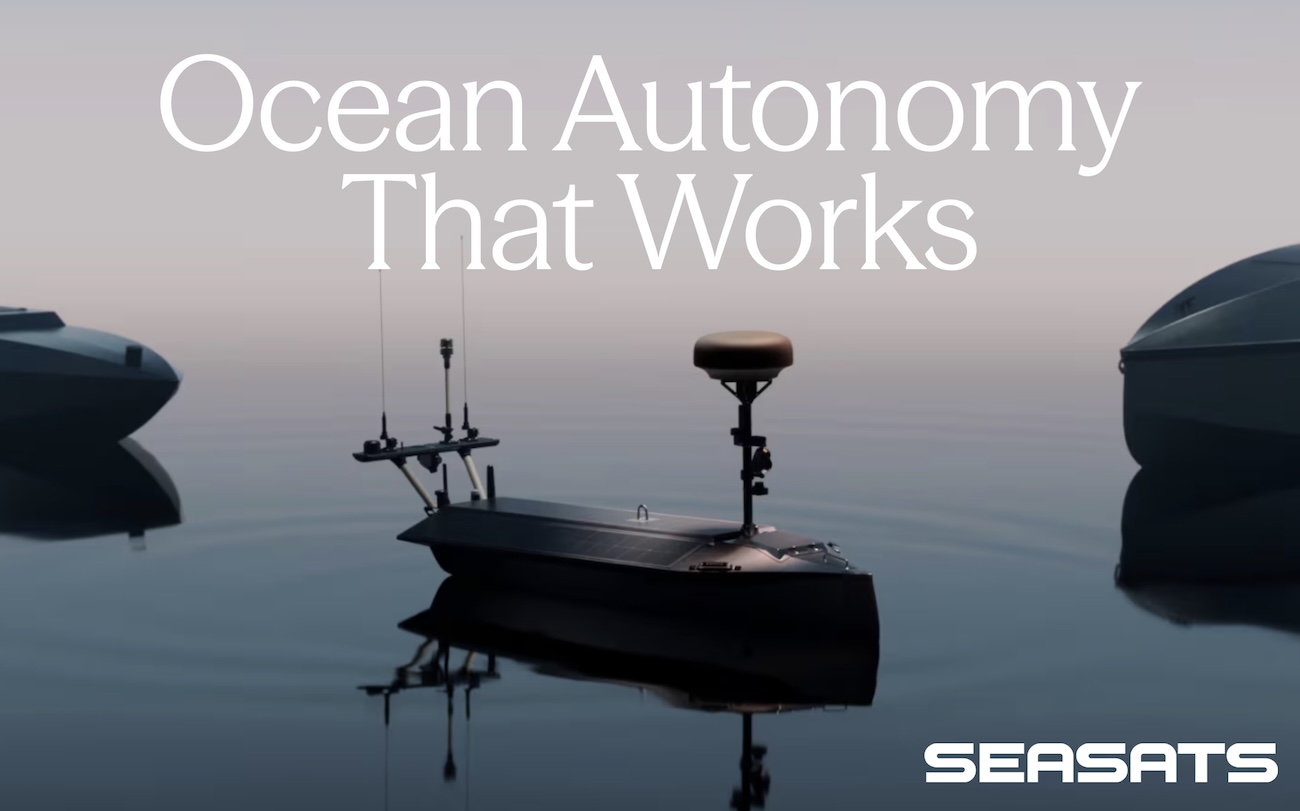
Neros has announced a partnership with Seasats, a U.S. manufacturer of unmanned surface vessels, or USVs, that include a rapid response boat called Quickfish. The Neros Seasats agreement, revealed on November 10, 2026, puts several of the Torrance, California company’s Archer FPV drones aboard Quickfish so they can be launched from the water and flown toward targets while their operators stay far away from the action.
Quickfish is built for maritime missions that stretch across several weeks, and that long loitering endurance is what Neros wants to pair with its Archer 10-inch Strike drones. According to the companies, pilots sitting in control rooms located anywhere in the world can use the combined system to launch the drones, fly them, and engage targets, all without being anywhere near the vessel itself.
Neros Seasats Demonstration Launches Archer Drones From Quickfish
The two companies have already tested the idea at sea. In a successful demonstration, Quickfish carried several Archer FPV drones inside its enclosed payload bay and then launched them from the vessel. That bay is modular, and Seasats says the modular architecture of Quickfish allows new systems to be integrated quickly and the boat to be adapted for different kinds of missions.
Long distance control comes from the communications gear built into the setup. The integration features satellite connectivity along with onboard control relays, and together they let operators pilot both Quickfish and the Archer 10-inch Strike drones remotely from any distance.
Soren Monroe-Anderson, the CEO and co-founder of Neros, linked the project to requests coming from the company’s government customers. He said those partners are searching for new ways to containerize strike drones, and he pointed to the Quickfish integration as one example of unmanned systems being stacked together for work at sea.
“As battlefield conditions evolve, our government partners are looking for novel ways to containerize strike drones. Anything that extends the range and number of systems we can deploy while keeping operators safely removed from combat is a win, and this integration with Quickfish is a perfect example of how unmanned systems can layer on top of one another to monitor, intercept, and engage maritime threats.” Soren Monroe-Anderson, CEO and Co-Founder, Neros
Quickfish Works as a Small Uncrewed Aircraft Carrier
The companies see the demonstrations as a new model for maritime patrol and response. In their description, a Quickfish loaded with Archer drones effectively becomes a miniaturized aircraft carrier, with no one on board and a design that can be produced at scale for a fraction of what traditional carrier units cost. Instead of a large crewed ship, the launch platform is a smaller boat that can stay out on the water for weeks.
The companies also shared performance figures for the pairing. The combined system has a maximum range of more than 550 nautical miles, mission endurance measured in weeks, and autonomous monitoring capabilities. According to the companies, that mix gives operators broad coverage and the ability to project force through coordinated effects at sea and in the air.
Seasats builds its vessels around continuous awareness of key stretches of water. Its networked USVs are meant to operate persistently, keep data streaming without interruption, and act when needed, supporting missions that range from border protection and port security to tripwire operations, oceanographic research, hydrographic survey, and countering illegal trafficking and fishing. Within that lineup of unmanned surface vessels, Quickfish fills the rapid response role.
How Customers Can Buy the Neros Seasats System
Buyers interested in the Neros Seasats setup have two routes. Customers who want configurations that join the unmanned surface vessel with aerial systems can contact Seasats directly, while the Archer FPV drones themselves are sold by Neros. Both companies say they design their hardware so it can be produced in large numbers, with Neros pairing combat-tested drone development with mass manufacturing and resilient supply chains across the United States and allied countries.
Neros describes itself as the highest rate domestic drone manufacturer and is targeting production capacity of one million autonomous systems per year by 2028. That goal was also part of earlier coverage of the Neros loan commitment on this site. The company holds major contracts with the Army and Marine Corps, along with contracts covering every component of SOCOM and half a dozen allied countries.
Seasats brings its own government track record to the Neros Seasats partnership. The San Diego company has more than $100 million in U.S. government contracts and vessels operating with the U.S. Navy, NOAA, and leading research institutions around the world. Its investors include Shield Capital, L3Harris Technologies, and Konvoy Ventures.
