

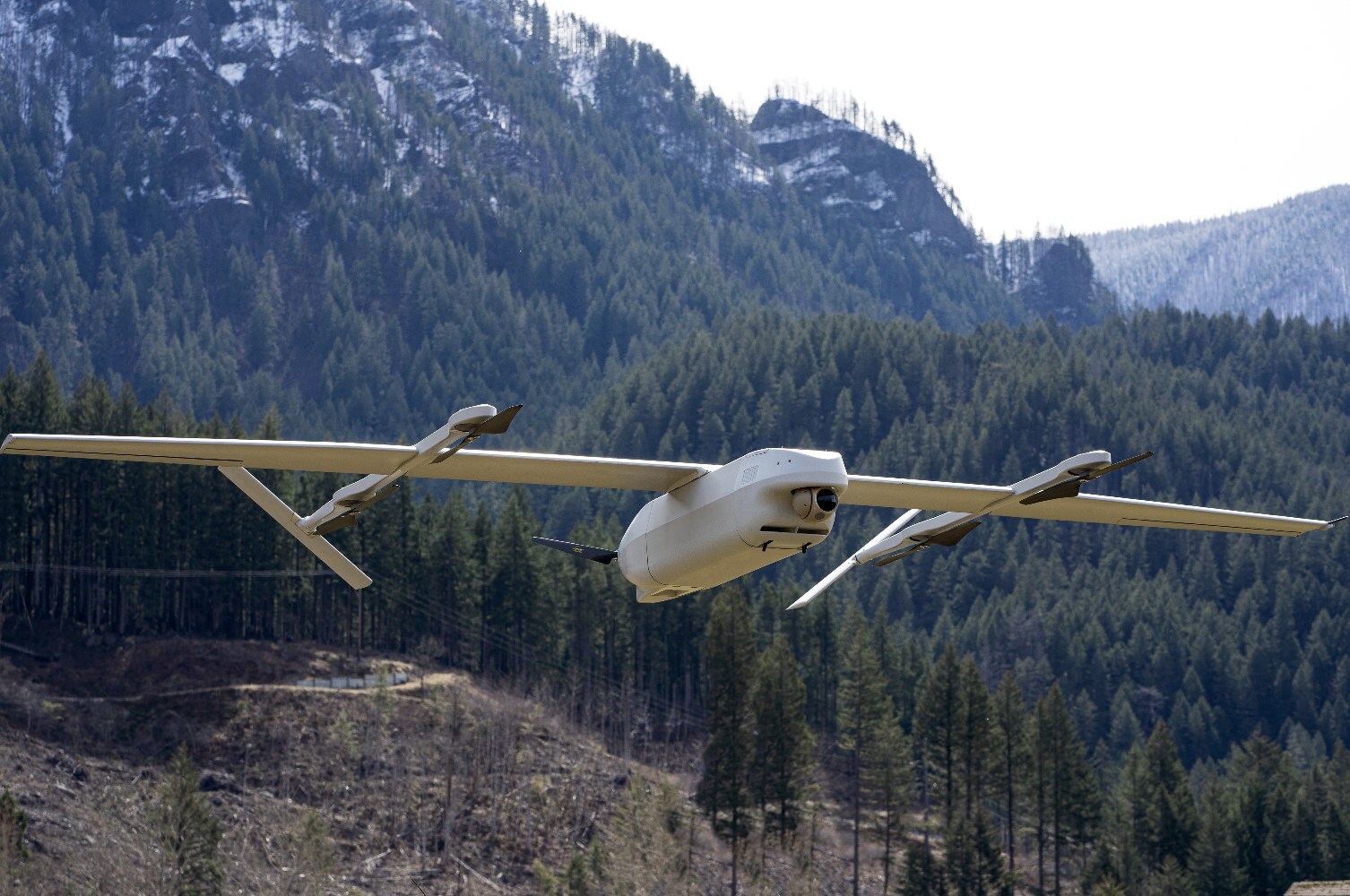
Heven AeroTech UAV contract news emerged on March 12, 2026, as the U.S. Army Contracting Command at Redstone Arsenal awarded the Virginia-based drone manufacturer a Basic Ordering Agreement in support of the Uncrewed Aircraft Systems Project Office. The agreement, effective January 2026, establishes a contract vehicle that allows Army units to procure Heven’s Z1 hydrogen-powered unmanned aerial system and associated hydrogen generation equipment through a pre-negotiated acquisition pathway.
The Z1 is a runway-independent drone designed for long-endurance missions. It runs on hydrogen power, which the company says extends flight time beyond what conventional battery or fuel-based platforms can offer. The BOA is enabled by Heven’s Blue UAS Select qualification, a designation that reflects compliance with security and supply chain requirements set by the Department of Defense for drone systems used in sensitive applications. Army units can now access the platform more quickly without navigating the full standard procurement cycle for each order.
“This agreement represents an important step in reducing procurement friction for Army units seeking advanced UAS capabilities. Hydrogen-powered systems offer extended endurance, logistical flexibility, and reduced dependency on traditional fuel and battery supply chains. Through this BOA, we are positioned to provide Army units with a pre-negotiated acquisition pathway to Heven’s systems, enabling faster procurement and accelerating our ability to support evolving mission requirements with resilient, domestically aligned technology.” Michael Buscher, President of U.S. Operations, Heven AeroTech
Heven AeroTech UAV Contract Aligns With U.S. Drone Dominance Executive Order
The BOA also aligns with the Administration’s Executive Order on “Unleashing American Drone Dominance,” which directs federal agencies to strengthen domestic drone manufacturing and reduce dependence on foreign-sourced components. Heven AeroTech, headquartered in Sterling, Virginia, designs and builds its core systems in the United States, with production and operational deployments spanning multiple countries. The company positions its hydrogen-powered approach as a logistics advantage for military units that operate in environments where traditional fuel resupply is difficult or risky.
Hydrogen as a power source for military drones remains a relatively limited field, and Heven AeroTech has staked much of its commercial identity on the extended range and reduced thermal signature that hydrogen propulsion can provide compared to internal combustion alternatives. The Z1 platform is built around those characteristics, with modularity that allows it to carry different payload configurations depending on mission requirements. This flexibility is central to the Army’s interest in using the platform for technology maturation, system integration, testing, and eventual fielding.
Streamlined Procurement Supports Rapid UAV Deployment for Army Units
The Basic Ordering Agreement structure is commonly used by U.S. military branches to speed up repeat purchases of equipment that has already been evaluated and approved. Rather than opening a new competitive solicitation each time a unit needs the system, the BOA allows procurement offices to place orders directly against the pre-established terms. For Heven, the arrangement provides a clear channel to Army customers without the uncertainty of individual contract competitions, and it signals a level of institutional confidence in the Z1 platform from the UAS Project Office at Redstone Arsenal.
The drone industry has seen increased government interest in hydrogen-powered platforms as military planners look for ways to extend mission endurance without relying on forward-positioned fuel depots. Battery-powered drones face hard limits on flight time, while hydrogen systems can theoretically operate for significantly longer periods on a single fill. As the Army continues to modernize its unmanned systems portfolio, agreements like this one reflect a broader push to bring commercially developed drone technology into active service faster than traditional acquisition timelines typically allow.
