

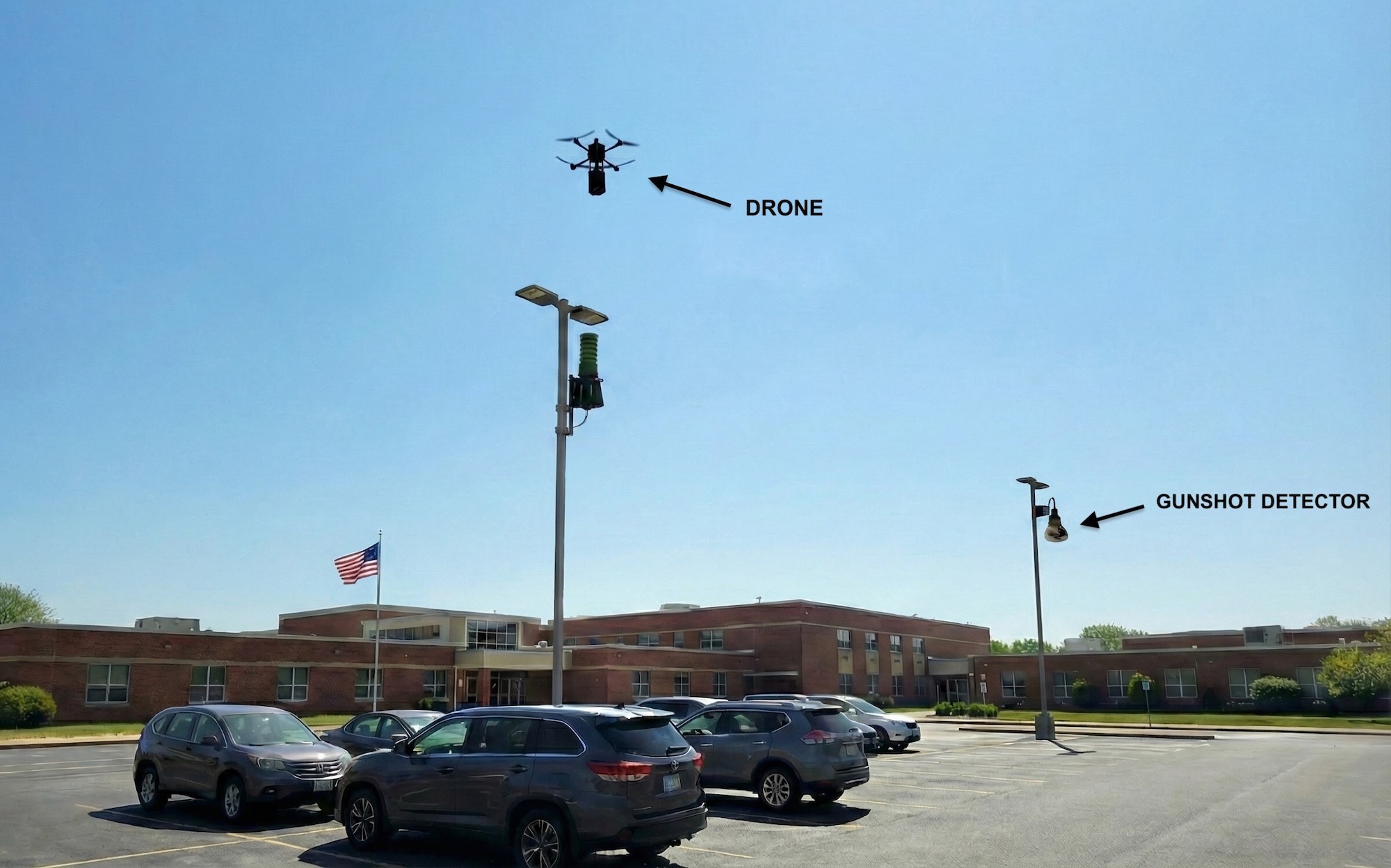
DefendEye and EAGL Technology have partnered to introduce an active shooter drone response system designed to deploy in under 20 seconds. The system combines EAGL Technology detection sensors with DefendEye autonomous drone capabilities to help schools, public venues, and private facilities receive real time situational awareness during critical incidents. The goal of the collaboration is to create a tool that can respond faster than human security teams, deliver live video to first responders, and help guide decisions during fast moving emergencies.
The companies note that current emergency response processes often depend on people making calls, describing scenes, and waiting for officers to arrive. These delays can lead to confusion and incomplete information. The new system aims to limit that uncertainty by launching a drone automatically the moment sensors detect gunfire. The aircraft then flies a pre planned route to the suspected location while streaming video to authorized personnel. This approach is meant to help teams confirm threats, identify hazards, and improve early coordination between school staff, security teams, and responding officers. According to information shared on EAGL Technology, the company develops advanced gunshot detection systems that are already used in multiple facility types, which supports the integration with autonomous drones.
“This combined solution advances the EAGL Technology mission to safeguard all communities with unparalleled and ultrareliable gunshot detection that immediately activates our partner response systems, including automated security doors, access control systems, mobile alert systems and now rapid aerial drone response solutions.” – Aaron Jost, CEO, EAGL Technology
Autonomous Launch Helps Deliver Rapid Awareness To Responders
The active shooter drone response system is designed to launch without human commands. Once the sensors detect and verify a threat, the drone takes off from a secure base and navigates a pre programmed path toward the identified area. DefendEye states that the drone uses onboard navigation and obstacle detection tools to reach the scene quickly, even on complex campuses or indoor adjacent spaces. As it travels, video feeds are shared with staff and first responders, giving them a clearer sense of what is happening before they enter the area.
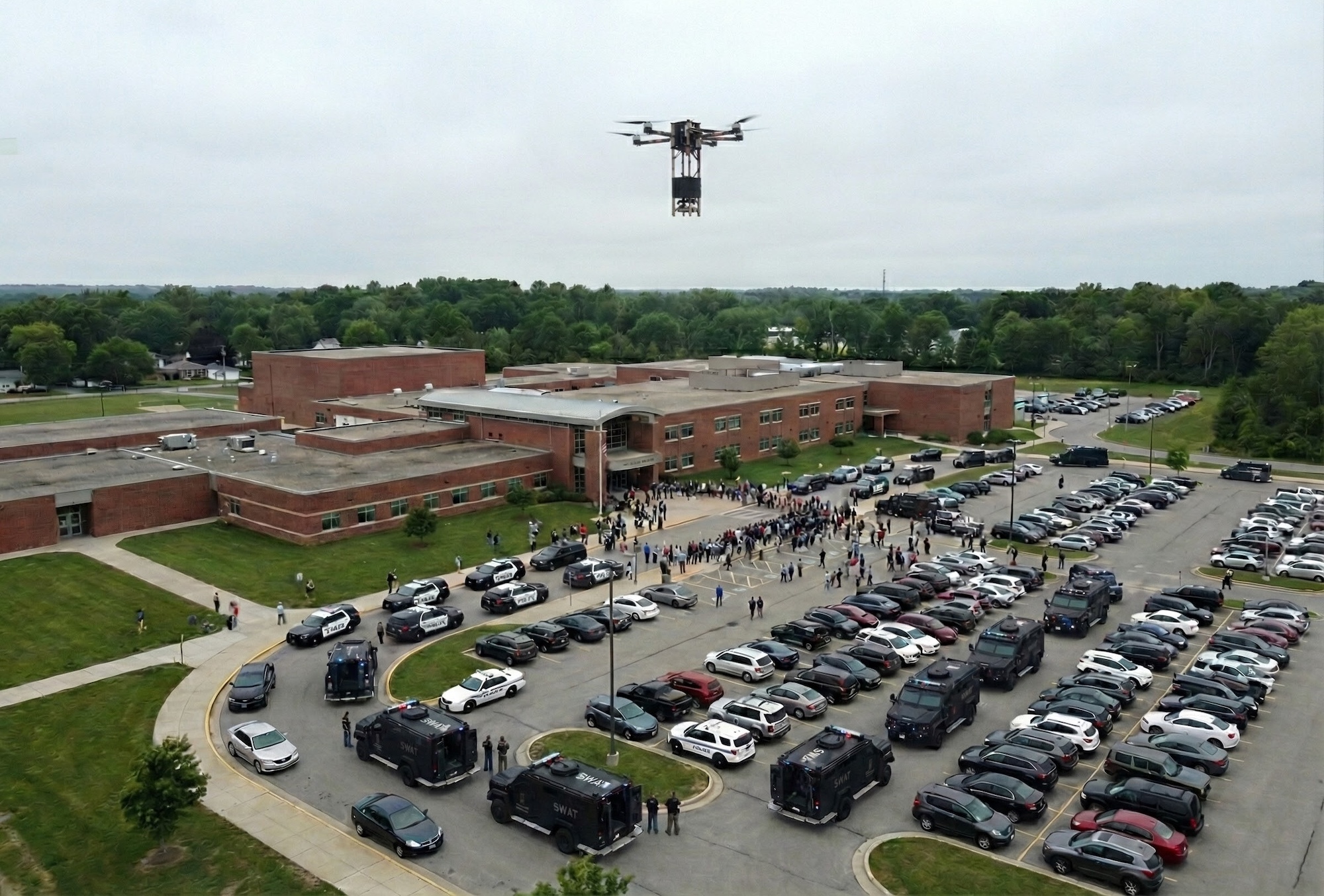
For many schools and public locations, the first minutes of an emergency can be the most confusing. People may not know where the threat is coming from or if the danger is still active. The drone serves as an information bridge, giving responders visuals they can use to decide how to approach the scene. The companies believe this can help reduce response time and improve overall communication. It may also help prevent officers from entering blind areas where they do not know the layout or the nature of the threat.
Partnership Aims To Strengthen Public Safety And Emergency Preparedness
The collaboration between DefendEye and EAGL Technology reflects a growing interest in autonomous tools that support public safety. Many facilities are searching for technology that can help them respond more effectively in dangerous situations, especially when staffing is limited or large areas must be monitored. By combining reliable detection sensors with fast moving drones, the companies aim to give organizations a way to gain immediate awareness during emergencies.
The system is also intended to help law enforcement teams work with clearer information. If responders can see the scene before arriving, they can make tactical decisions faster and more accurately. This may improve safety for both officers and civilians. The companies plan to continue developing features that support multi building campuses and larger public venues, where rapid identification of threats can play a significant role in how an incident unfolds.
DefendEye and EAGL Technology expect the active shooter drone response system to be used in schools, hospitals, sports facilities, and commercial properties. By focusing on automated launch capabilities and fast video delivery, the system is designed to provide actionable information within seconds, supporting the larger goal of helping communities prepare for critical incidents with more effective tools.
