

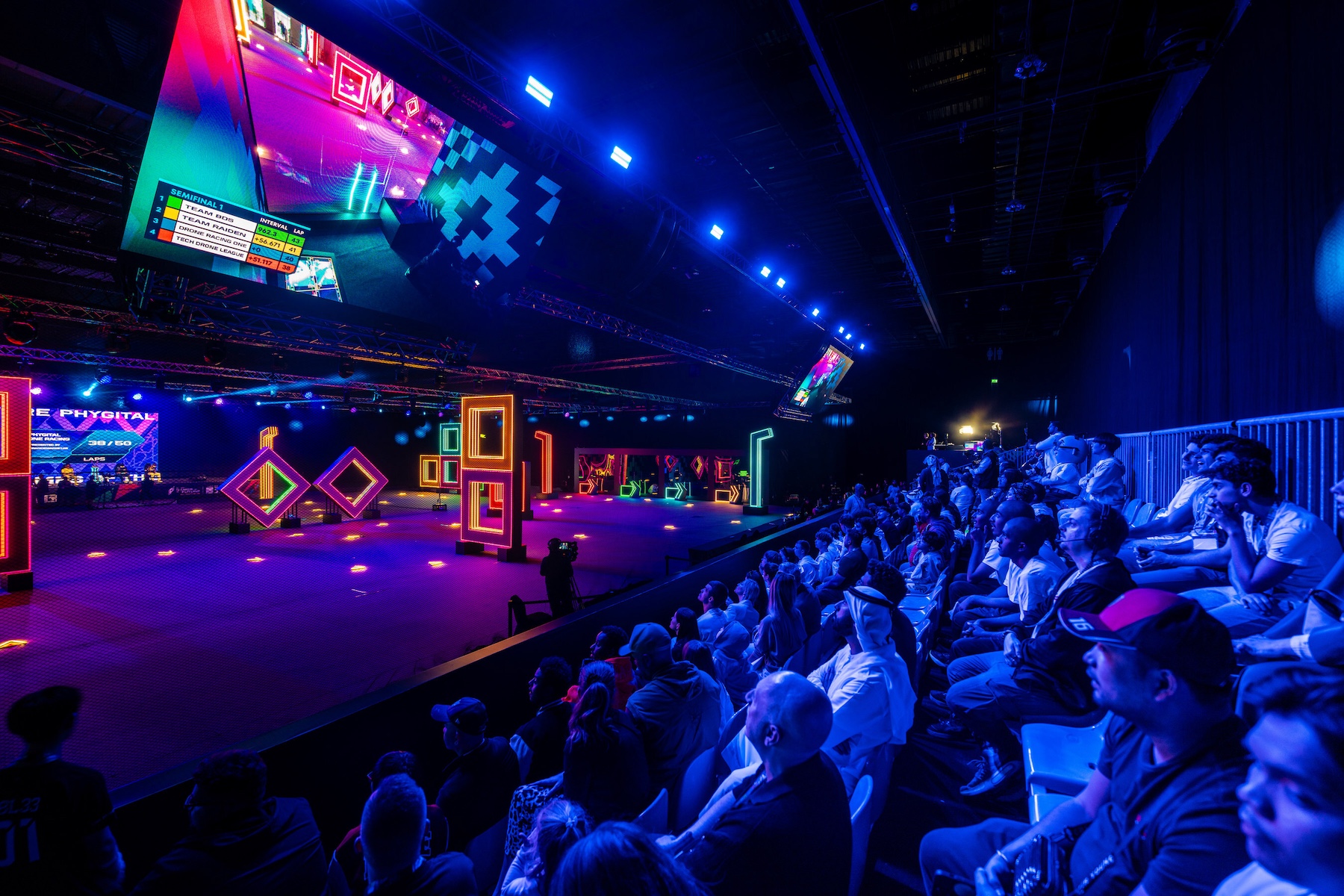
Drones and phygital (physical + digital) sports were among the technologies showcased as the Games of the Future 2025 concluded after six days of competition in Abu Dhabi, United Arab Emirates. The international event brought together more than 850 participants from over 60 countries and focused on blending physical athletic performance with digital and technology driven competition. Hosted at the ADNEC Centre, the Games highlighted how emerging technologies are reshaping modern sports and entertainment.
The Games of the Future is an annual global event built around the concept of phygital sports, which combine physical movement with digital gameplay and advanced technology. The 2025 edition, powered by ADNOC, took place from December 18 through December 23 and featured competition across 11 disciplines. These events were designed to appeal to traditional sports fans as well as audiences interested in esports, robotics, and drone related innovation, creating a format that bridges multiple worlds of competition.
Participants ranged in age from teenagers to older adults, underscoring the broad appeal of the Games. Fans followed the action inside the venues and through international broadcast and streaming platforms, with coverage available in multiple languages. This wide distribution allowed viewers around the world to engage with the competition as it unfolded and helped introduce phygital sports to new audiences.
Drones And Phygital Sports Drive A New Type Of Competition
Drones and phygital sports represent a growing category of competition where physical skill and digital control are equally important. At the Games of the Future 2025, athletes and competitors took part in events that required quick decision making, coordination, and a strong understanding of technology alongside physical performance. These hybrid formats are designed to reflect how digital systems and automation are becoming part of everyday physical activity and competitive environments.
The inclusion of technology driven disciplines highlights how sports are evolving beyond traditional formats. Drones, robotics, and digital interfaces are increasingly used to create new competitive experiences that blend real world movement with virtual environments. This approach allows organizers to reach younger audiences who are comfortable with gaming, automation, and emerging technologies while still maintaining a focus on physical participation and athletic ability.
Events were structured to emphasize both athletic performance and technical precision. Competitors were required to perform physical actions while also managing digital systems, creating challenges that differ from traditional sports or esports alone. This format continues to gain attention as a way to modernize competition without removing the physical elements that define sport.
Drones, Technology, And Global Engagement Shape The Event Future
The Games of the Future 2025 demonstrated how technology focused events can achieve significant global reach. Thousands of spectators attended the competitions in Abu Dhabi, while millions more followed through broadcast partners, social platforms, and dedicated streaming services. This broad distribution helped introduce phygital sports and drone related competition to audiences who may not have previously engaged with these formats.
“The success of the Games of the Future Abu Dhabi 2025 is a testament to what can be achieved when innovation, ambition, and collaboration come together.” Nis Hatt, CEO of Phygital International
The statement reflects how organizers view the event as part of a larger movement toward technology integrated sports. Following the conclusion of the 2025 competition, organizers confirmed that the next Games of the Future will take place in Astana, Kazakhstan in 2026. In the lead up to that event, qualifying tournaments known as Phygital Contenders will be held to identify teams and athletes from around the world.
As interest in drones, digital competition, and hybrid sports continues to grow, events like the Games of the Future are helping define what the next generation of global competition may look like. The conclusion of the 2025 Games marks another step forward for phygital sports and technology driven competition, showing how physical performance and digital systems can come together to create engaging and modern sporting experiences.
