

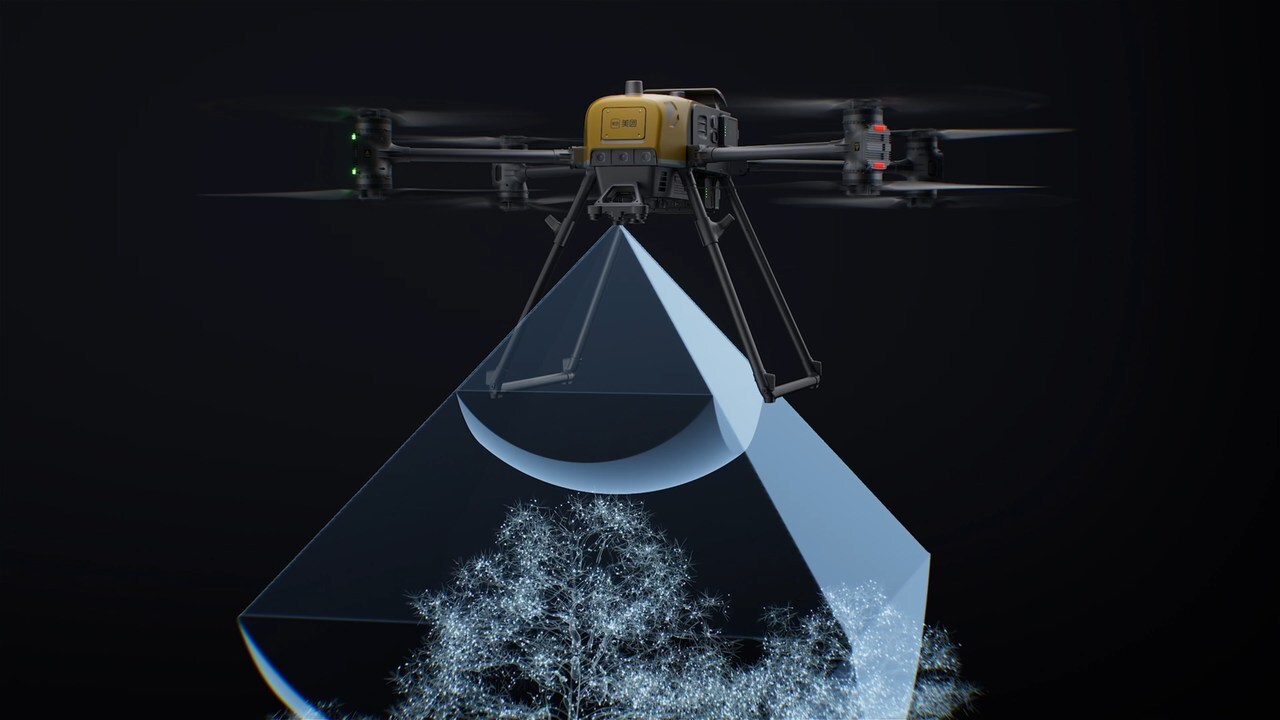
Solid state lidar drone delivery technology is being added to Meituan autonomous aircraft through a new agreement with Hesai Technology. The company will supply solid state lidar sensors for use in Meituan drone delivery brand Keeta Drone, which focuses on transporting food and small goods through low altitude urban airspace. The move highlights how advanced sensing systems are becoming essential as drone delivery operations scale.
Meituan is one of the largest food delivery platforms in China, handling millions of orders every day. Keeta Drone is its dedicated drone delivery program, designed to move packages through the air rather than on crowded streets. The service has already completed hundreds of thousands of autonomous deliveries across multiple cities, making it one of the most active real world drone delivery networks currently operating.
Flying delivery drones in cities presents unique challenges. Aircraft must safely navigate around buildings, trees, power lines, and other obstacles while operating at relatively low altitude. To do this reliably, drones need sensors that can understand their surroundings in real time. Solid state lidar is increasingly being adopted to meet those demands.
Solid State Lidar Drone Delivery Improves Urban Navigation
Solid state lidar drone delivery systems work by emitting laser pulses and measuring how long it takes for the light to reflect back from nearby objects. Using this information, a drone can calculate distances and create a detailed three dimensional map of its environment. This allows the aircraft to detect obstacles and adjust its flight path while it is in the air.
Unlike older mechanical lidar designs, solid state lidar contains no moving parts. This makes the sensor smaller, lighter, and more durable, which are important advantages for drones that must carefully manage weight and power usage. According to the announcement, Hesai solid state lidar is designed for aerial platforms and provides a wide field of view suitable for complex environments.
Urban areas often create difficult conditions for navigation. Tall buildings can interfere with satellite signals, and lighting conditions can change quickly. Lidar does not rely on visible light and can operate in low light or at night, helping drones maintain awareness even when cameras alone may struggle. This improves consistency and safety during delivery missions.
Keeta Drone And Hesai Expand Low Altitude Logistics
Keeta Drone continues to grow as part of Meituan broader logistics strategy. By integrating solid state lidar drone delivery technology into its aircraft, the company aims to improve navigation accuracy and operational reliability as its delivery routes expand. These improvements are especially important as drone delivery moves closer to larger scale commercial use.
For Hesai Technology, the agreement represents an expansion of lidar applications beyond automotive and robotics markets. The company develops lidar solutions for a range of industries and views low altitude mobility as an important growth area. Applying its technology to drone delivery reflects broader interest in using advanced perception systems to support autonomous flight.
The partnership also reflects a wider trend across the drone industry. As companies gain more experience operating autonomous aircraft in real world conditions, sensor reliability becomes a key factor in scaling operations. Advanced lidar systems are increasingly viewed as a foundation for safe and repeatable drone delivery.
As solid state lidar drone delivery technology continues to mature, it is expected to play a central role in shaping how drones operate in cities. Agreements like this demonstrate how sensor manufacturers and delivery platforms are working together to move drone delivery from limited trials toward everyday use.
