

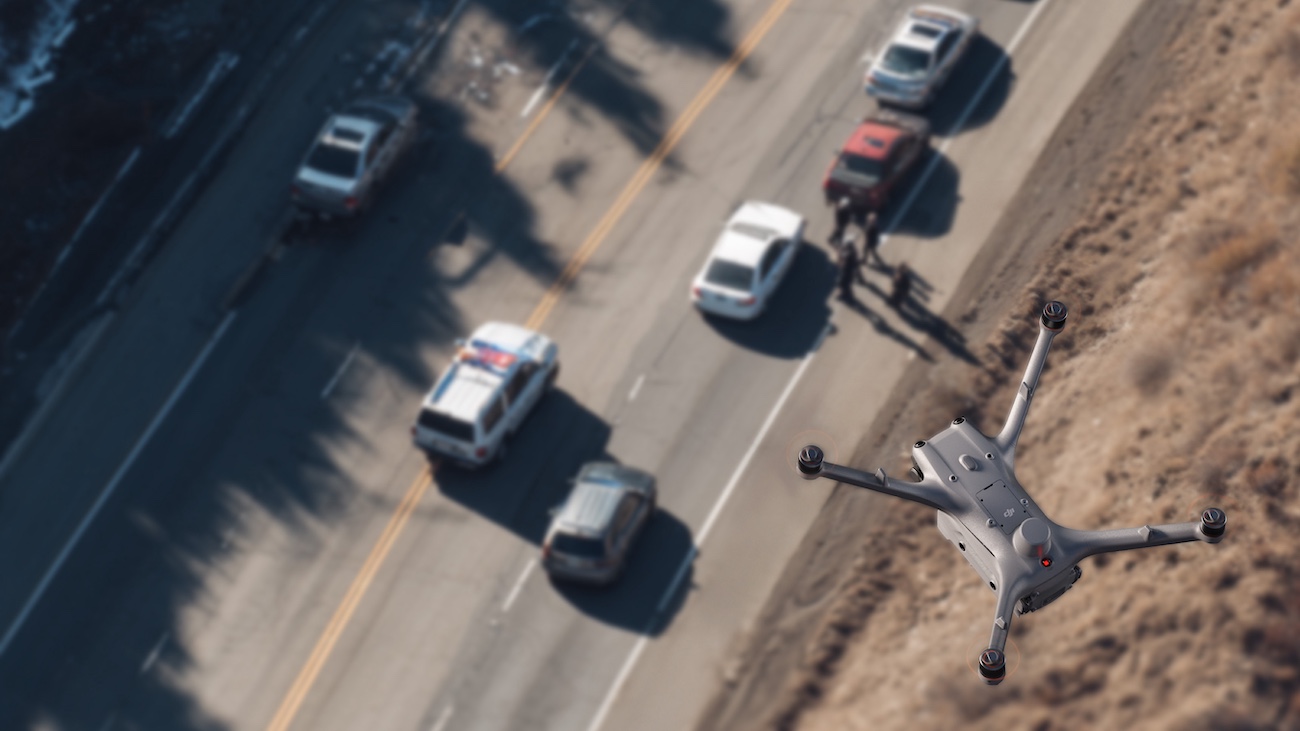
DJI has published a new operations guide aimed at organizations that want to scale their DJI DFR drones from one-off pilots into full programs. Released on June 25, 2026 from Shenzhen, China, the document is titled “Dock as First Responder: Enterprise Deployment & Operations Guide.” DJI, which describes itself as the global leader in civilian drones and creative camera technology, says the white paper is meant to serve as a reference for practitioners who are weighing upgrades to their drone fleets and supporting infrastructure.
Over the past five years, drones have shifted from tools that a pilot launches by hand into docked response infrastructure that can react to an alert on its own. As more first responders and enterprise IT security teams consider that change, the guide lays out the decisions, trade-offs, and sequencing that determine whether a Dock as First Responder integration actually works in a live operational setting. The company says the material is drawn from real deployments across public safety and private security programs in Asia, Europe, and North America.
What the New DJI DFR Drones Guide Covers
Built around DJI DFR drones, the white paper reflects programs that have moved past proof of concept and into enterprise IT review, production deployment, and ongoing service delivery. It walks through several practical areas, starting with a value analysis that helps a team build the business case using operational cost comparisons and documented market examples. From there it moves into system architecture, helping operators pick the right integration interfaces for live streaming, telemetry, media, and event notification, with protocol-level detail and decision logic for each data domain.
Other sections focus on application scenarios and workflow, recommending a phased build where each stage is validated before more complexity is added on top. These docked systems sit alongside DJI’s wider enterprise lineup, which already shows up in hands-on field work such as a Matrice 4 rescue mission, and the guide aims to bring that same dependability to automated response. The document also covers data security and compliance, outlining the paperwork needed to clear enterprise IT review, plus an internal data flow reference for staffing a production program with defined roles and escalation paths. DJI is pairing the guide with an AI-enabled companion called Awesome DFR Integration Skill, which packages the architecture, workflow, and FlightHub 2 guidance into structured context so teams can move from reference design to middleware planning faster.
DJI Dock 3 and FlightHub 2 Power the Response
Most drone-as-first-responder programs still rely on a pilot to launch and fly the aircraft. That approach is useful for proving the concept, but it forces organizations to weigh trade-offs as they try to grow. Many have turned to a Dock as First Responder model instead, which narrows the gap between an alert and aerial awareness. DJI says a pre-positioned DJI Dock paired with FlightHub 2 Auto-Dispatch can give responders rapid situational awareness at a scene in under 100 seconds, based on data measured with a production model in a controlled environment, helping crews verify a situation and guide ground teams sooner.
Since their 2025 launch, DJI Dock 3 with FlightHub 2 has made dock-based aerial response a proven operational system, and the company’s public safety and first response resources detail how the setup fits into existing command tools. The latest “drone-in-a-box” model, Dock 3, is built for harsh conditions with IP56 protection and operation in temperatures from -30 to 50 degrees Celsius. FlightHub 2 acts as the integration hub, connecting the dock with alerting, command, video, and data workflows through its Event API, RTSP live streaming, Auto-Dispatch workflow, and FlightHub Sync.
DJI Dock 3 and FlightHub 2 are available through authorized DJI Enterprise dealers, and the company has released both the white paper and the new integration guide for teams planning their next move. For teams scaling DJI DFR drones beyond manual flights, the guide frames docked response as the bridge between a successful pilot project and a dependable program that can run around the clock.
