

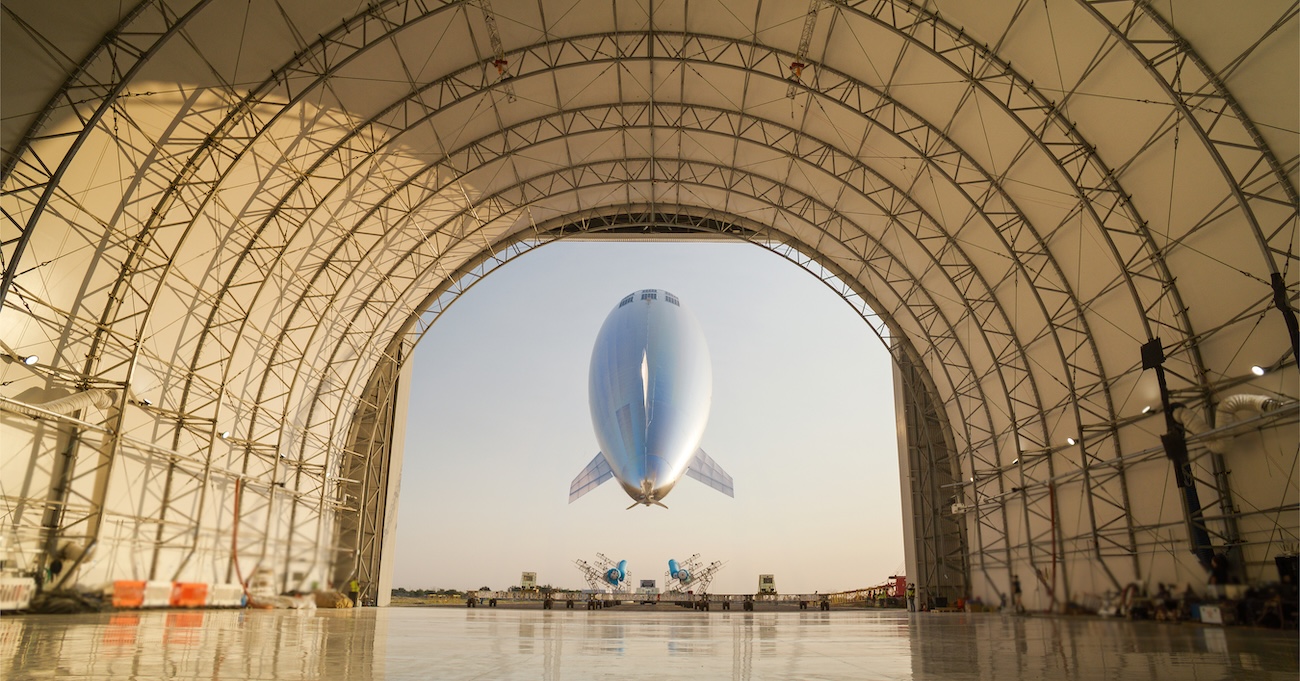
Sceye ST1 has completed its return to the United States, closing out a stratospheric round trip between New Mexico and Japan that the company describes as record-breaking. Sceye, a U.S. aerospace and material science firm that builds High Altitude Platform Systems (HAPS) for stratospheric infrastructure, announced the result on September 9, 2026. The mission lasted 30 days, covered nearly 30,000 km, and spent about a week operating in the stratosphere over Japan, where the platform was used to test connectivity to ordinary phones, communications with drones, and edge computing at altitude.
The flight began on August 9, 2026, and the platform reached Japan 13 days later. Once there, Sceye worked with SoftBank Corp., a leading operator of telecommunications and IT businesses in Japan and worldwide, to deliver mobile broadband to unmodified devices through SoftBank’s core network. The two companies also ran HAPS-based edge computing and drone communications trials intended to support the development of a three-dimensional communications network. Sceye calls ST1 its first flight to Asia and a milestone on the way to commercial deployment of HAPS as stratospheric infrastructure.
Sceye ST1 Flight Path From New Mexico to Japan and Back
On the way home, Sceye ST1 re-entered the continental United States on September 4, 2026. A day later, on September 5, it reached airspace near the company’s headquarters in Moriarty, New Mexico, where Sceye carried out additional vehicle testing followed by a planned termination and descent. The outbound leg, in which Sceye HAPS technology crossed the Pacific, set up a week of testing over Japan. The platform flew as an unmanned free balloon for the entire journey, holding its altitude and area of operation through consecutive day and night cycles, which the company compares to a geostationary satellite positioned about 1,800 times closer to Earth at a fraction of the cost.
While over Japan the platform stayed inside Japanese-managed airspace for more than seven days and held its target location on the coast for an extended period, with a station-seeking radius as small as 5 km. It operated between 16.5 and 17 km in altitude while completing telecommunications, drone, and emergency communications work. ST1 carried SceyeCELL, described by the company as a first-of-its-kind cell tower in the sky built to deliver wide-area mobile broadband straight to standard devices from the stratosphere. Sceye documented the Service Test 1 mission when the platform first reached Japan, and ST1 is the first flight in the company’s Service Test Program. When deployed at full scale, a single Sceye HAPS is designed to cover the same area as roughly 500 terrestrial towers.
“Groundbreaking and historic only begin to describe our ST1 flight,” says Mikkel Vestergaard Frandsen, Founder and CEO of Sceye. “This mission proved not only that our technology, vehicle systems, payload, and operational infrastructure are ready for connectivity services, but also that the stratosphere is where the future non-terrestrial infrastructure lies. The stratosphere is what will enable the always-on future – including the promised land of 6G. Together ground, stratosphere, and space – each operating at their optimal strengths, will change the course of humanity.” Mikkel Vestergaard Frandsen, Founder and CEO of Sceye
Drone Communications and Edge Computing Results Over Japan
Testing over Japan covered mobile broadband from the stratosphere, including text messaging, voice calls, internet access, and video streaming. Sceye and SoftBank also tested emergency calls through an emergency alert messaging system built for large-scale disasters, along with communications with drones. According to the company, performance matched that of terrestrial networks while cutting radio interference with ground-based base stations.
A server installed on the HAPS allowed data processing to happen directly on the platform. Sceye and SoftBank measured an average round-trip processing response time of 68 milliseconds, which the company says reduced communications latency by more than 40 percent compared with internet-based cloud processing. Sceye describes this as the world’s first successful test in which a mobile core network and a web server for processing were installed on a HAPS, with response processing handled entirely onboard and the results relayed back to smartphones.
Sceye was founded in 2014 and says its name is pronounced “sky”. The company focuses on universal connectivity, climate monitoring, natural resource management, and disaster prevention through stratospheric infrastructure. With Sceye ST1 now back on the ground in New Mexico, the month-long trans-Pacific flight stands as the opening entry in the company’s Service Test Program.
