

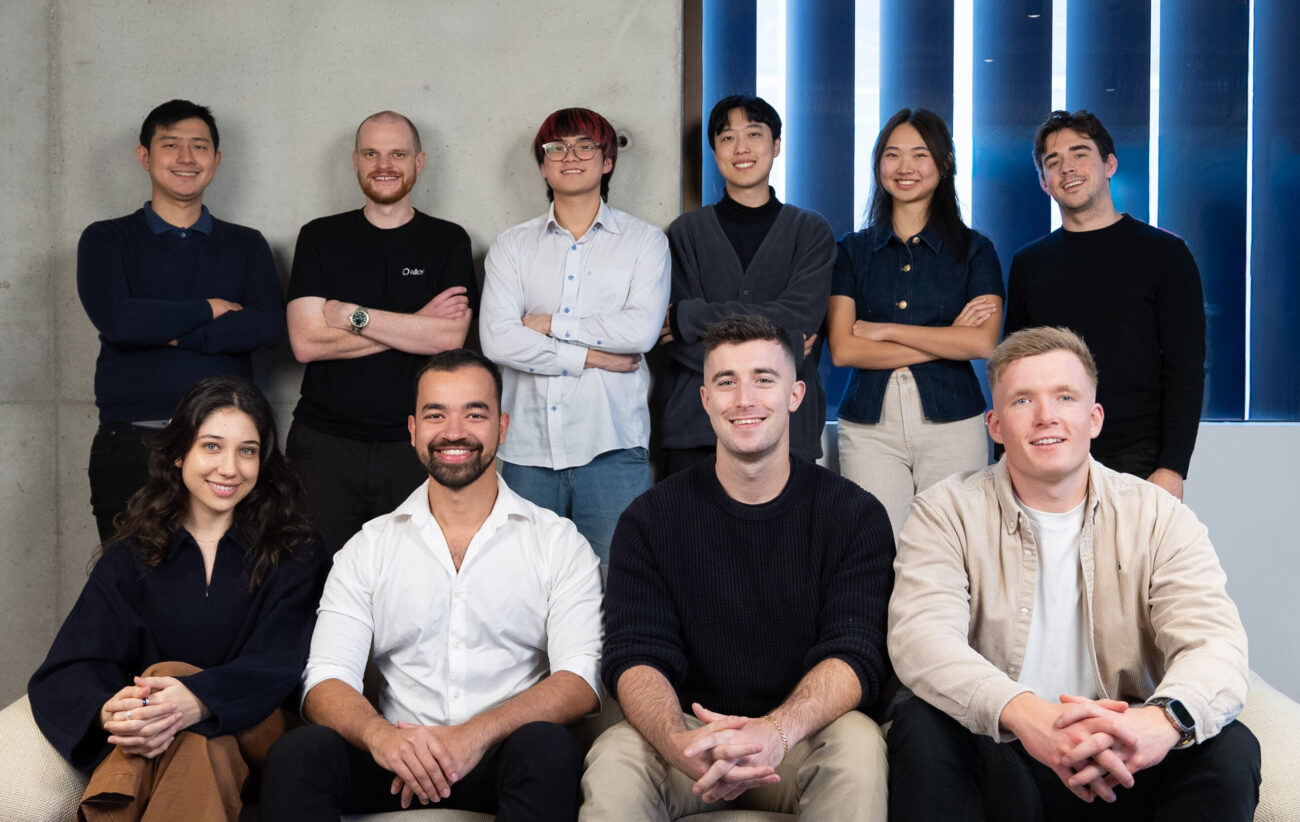
Alloy Robotics has raised $8 million at an $80 million valuation, a little over a year after the company was founded. The startup builds AI agents that sift through robot data and work out why a machine failed, a job that becomes harder as a fleet grows from a handful of units into hundreds. Alloy Robotics was founded in Sydney in 2025 and now runs from both Sydney and San Francisco, serving engineering teams in navigation, defense, drones, agriculture, maritime, humanoids, construction and medical robotics.
Square Peg led the round, and pre-seed backers Blackbird, Airtree and Skip Capital all returned for another turn. The raise also brought in leaders and engineers from OpenAI, Anthropic, Tesla, Waymo, Halter and Carbon Robotics, as well as several companies that already run the software. Forbes was first to report the deal. Counting earlier investment, the company has now raised roughly $10.5 million.
How Alloy Robotics Turns Fleet Logs Into Answers
The platform gathers fleet logs, telemetry, video and sensor data in one place, then adds the engineering context that lives in tools like Slack and Jira. Agents scan that combined pile for anomalies, regressions and patterns that keep repeating, and every finding is tied back to the mission, timestamp and signal it came from. The pitch is straightforward: the answer to most failures already sits in the data a fleet has recorded, but it is buried under everything else the machines logged that day. The company describes the result as an agent platform for robotics teams, and the aim is to hand engineers evidence instead of leaving them to guess which subsystem misbehaved.
Alloy Robotics also runs a native MCP server, which lets coding agents such as Codex and Claude Code reach the context behind each mission directly. Engineers can investigate a problem without first stitching together disconnected raw files by hand, which is often the slowest part of any failure review. Joe Harris, who founded the company and serves as chief executive after helping scale Eucalyptus as chief commercial officer before its $1 billion acquisition, framed the problem in blunt terms.
“When a robot fails, an engineer can spend days, sometimes weeks, working out why. Often the same issue has come up before.” Joe Harris, Founder and CEO of Alloy Robotics
Drone and Navigation Teams Report Faster Field Testing
At Advanced Navigation, field-test analysis that once consumed a full day now takes under ten minutes, according to product validation manager Jai Castle. He said the internal conversation has changed completely, moving from worrying about whether work can be finished on time to asking what else the team can take on. During one stretch, the group cleared 44 field tests in a little over a day, a workload that used to stretch across weeks.
The drone side of the business shows a similar pattern. At U.S. autonomous-drone startup DroneForge, engineer David Crabtree suspected that the wrong component was failing. Alloy showed that both state estimators were working normally and pointed to the actual fault instead. Early stage robotics investment has spread across the drone sector, where companies building UAV sensors and autonomy software have drawn their own funding rounds.
“Every time you misdiagnose, it can just compound.” David Crabtree, Engineer at DroneForge
Usage has climbed quickly. Alloy now supports close to 1,000 robots and has analyzed more than 10,000 missions, with most of that volume arriving in the past two months. Teams use it to find faults sooner, catch regressions before they reach the field and push overall fleet reliability higher.
Where the New Alloy Robotics Funding Goes Next
The money is earmarked for engineering hires, expansion in the United States and further work on the company’s models and agent platform. Alloy describes itself as an AI data platform for robotics teams, built so its agents surface the patterns that matter and engineers spend less time picking apart the last run. Jethro Cohen, a principal at Square Peg, said the firm backed the company because of what happens when engineers can learn faster from the data their own machines produce.
“Robotics is one of the hardest industries to build in, and the teams that win will be those that learn fastest from their own data.” Jethro Cohen, Principal at Square Peg
Harris argues that getting a robot to work is only the starting point, and that teams need to learn from every run before they can earn trust at scale. For drone operators, that means treating each flight as a source of evidence rather than a file that gets archived and forgotten. Alloy Robotics is betting that the teams flying the most missions will also be the ones with the most to gain from reading their own data properly.
