

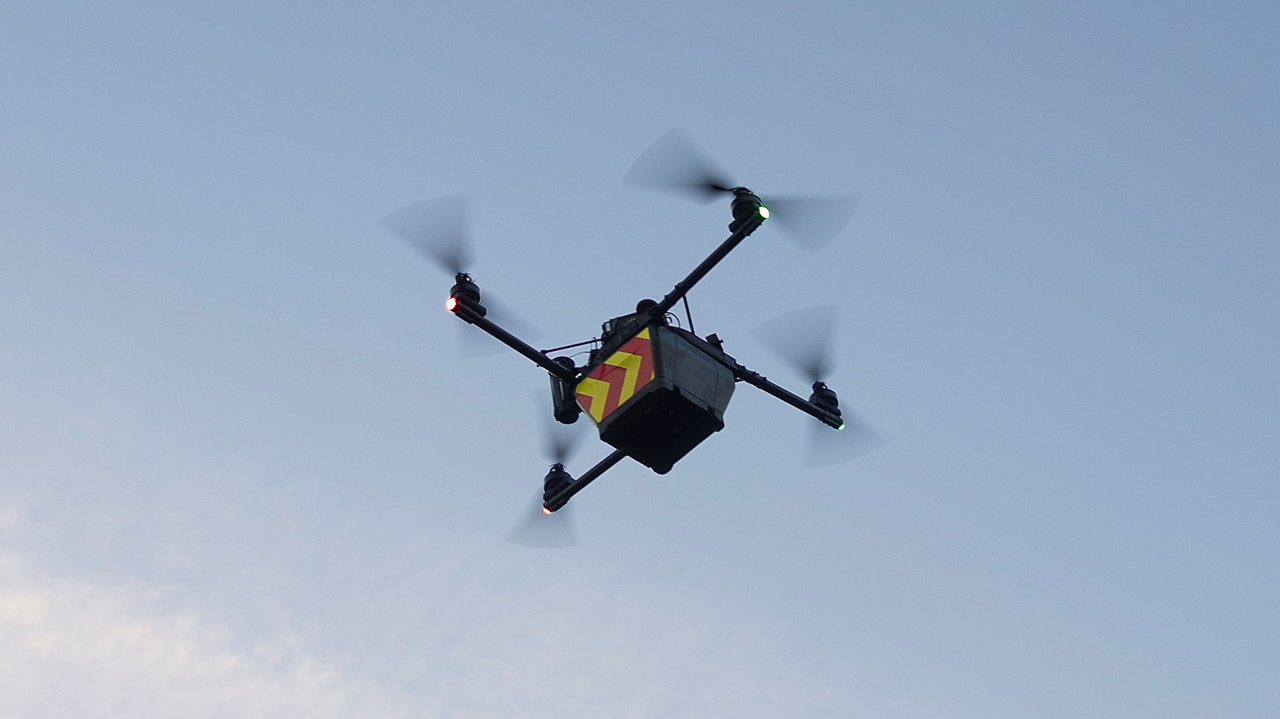
Archer First Response Systems has stepped forward as the operator behind what it calls the nation’s first EMS-driven pre-hospital whole blood delivery program. The ArcherFRS drone program was developed with Hillsborough County Fire Rescue, Tampa General Hospital, OneBlood, the University of South Florida Health Morsani College of Medicine, and the Florida Center for Emergency Medical Services. The company announced its role in the Tampa-based effort on August 7, 2026, presenting itself as the partner that absorbs the technical and regulatory work involved.
Two fire stations will host the equipment. Station 9, in the Faulkenburg and Sabal Park area, and Station 37 in Riverview will each hold a system, and the company says whole blood can reach the scene of severe hemorrhagic trauma in under three minutes on average. The initial coverage area spans roughly 70 square miles, which places blood in the hands of paramedics during the earliest minutes of a bleeding emergency.
How the ArcherFRS Drone System Reduces the Burden on Agencies
Whole blood delivery sits at the harder end of emergency drone work. It calls for precise payload handling and environmental control for a temperature-sensitive, high-value medical product, along with strict airspace and weather gating, reliable readiness around the clock, and delivery locations that crews can easily reach. Remote pilot oversight, regulatory approvals, seamless integration, and ongoing maintenance sit on top of all that.
The ArcherFRS drone service is built to absorb that complexity as a fully managed offering. The company installs and maintains the Ground Control Hubs at the stations, provides round-the-clock system monitoring, piloting support, and airspace sanitization, and handles regulatory approval support, weather verification, system health checks, and monthly on-site maintenance. Paramedics on scene request an emergency delivery from their mobile devices. The agency keeps operational control and its Certificate of Waiver authority, so responsibility for medical rescue missions stays with the fire department while crews stay focused on patient care.
“ArcherFRS has made a powerful capability easily available to our agency and puts a true force multiplier in the hands of our crews without requiring us to stand up a new department. That allows us to stay focused on delivering better and faster service to the citizens we protect.” Chief Todd Carnell, Hillsborough County Fire Rescue
Champion Hospital Partner Program Connects Tampa General to Crews
The Hillsborough County rollout also shows how the company approaches funding and partnership. Tampa General Hospital worked with Archer First Response Systems and Hillsborough County Fire Rescue through the Champion Hospital Partner Program to bring advanced prehospital tools to the agency. The company says the model matters in a period when agency budgets face real uncertainty, since it brings hospitals, agencies, and clinical stakeholders together so life-saving tools reach the field even when near-term funding paths are not fully settled. The stated aim is that agencies avoid choosing between fiscal caution and giving crews every possible advantage in the first minutes of trauma.
“Strong partnerships and tight alignment between hospitals, fire rescue, and technology partners create a more robust continuum of care. When we work together this way, we move critical interventions closer to the patient and give first responders the tools they need to improve outcomes long before the hospital doors.” Michele Moran, Senior Vice President for Emergency Services at Tampa General Hospital
The whole blood effort follows earlier work in the region, including a first-in-the-nation 911-integrated delivery of AEDs and Narcan carried out with Manatee County EMS and Tampa General Hospital. Payloads across ArcherFRS drone systems can include AEDs, Narcan, EpiPens, whole blood, and other critical supplies weighing up to roughly 6.5 to 7 pounds. Each hub covers about 35 to 50 square miles, and deliveries can run day or night when conditions allow.
The company describes itself as a provider of fully managed, 911-integrated emergency drone logistics for fire-rescue and EMS agencies, delivering medical supplies to the scene in under three minutes on average with integration and operational support included. For fire chiefs in Hillsborough County, the practical outcome is a clinical capability that arrives without a new department, added staff, or resources pulled away from core fire-rescue operations.
