

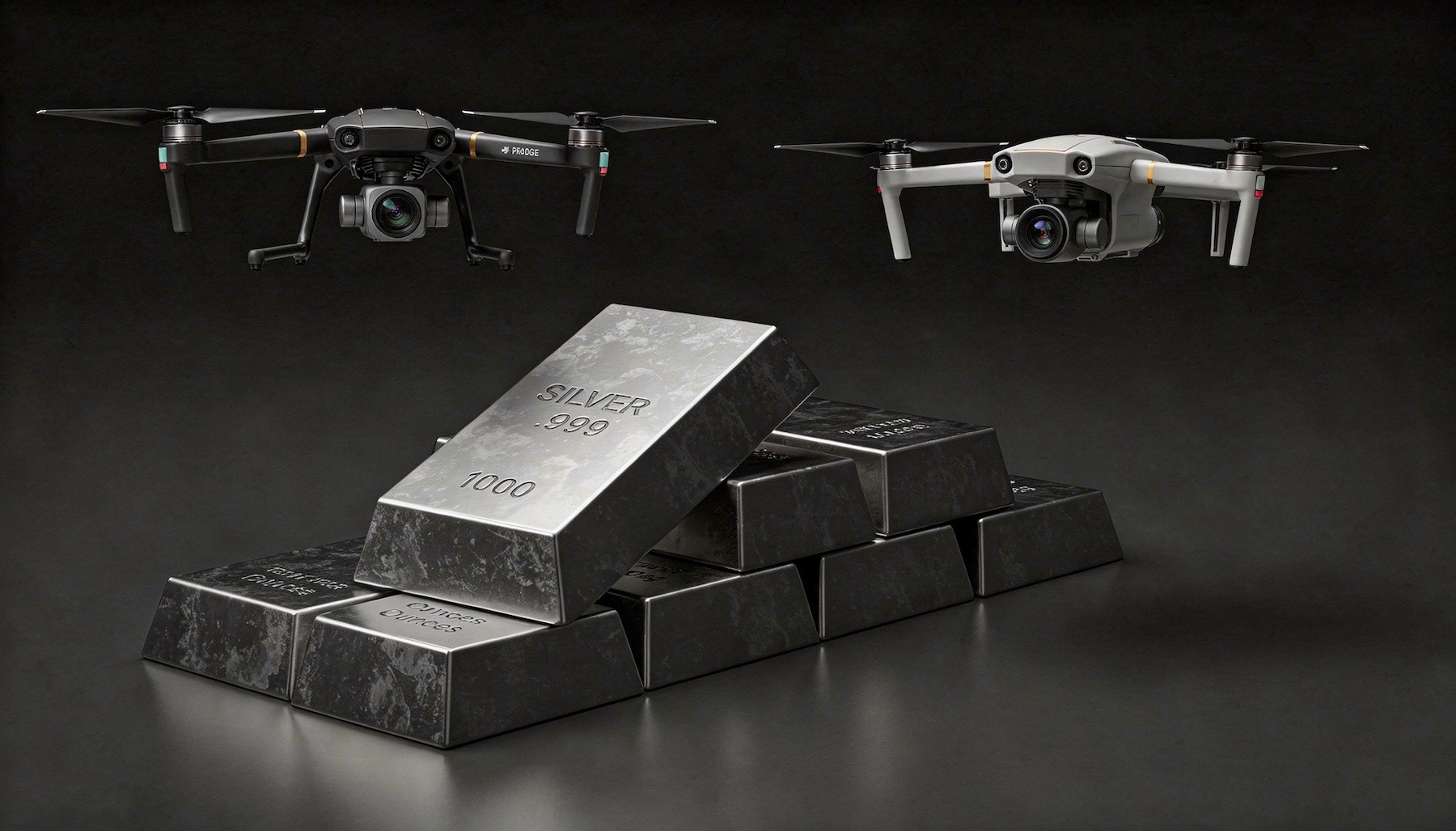
Silver in drone hardware is gaining renewed attention as the technology sector undergoes a shift from abstract, software driven platforms back toward physical systems and advanced electronics. According to a recent analysis by InterSignal, silver experienced a historic year as demand increased across industries focused on tangible hardware, signaling a broader move toward technologies that rely on real world materials and manufacturing.
This shift is particularly relevant for drones and UAV systems, which depend heavily on high performance electronic components. Unlike purely digital products, drones require precision circuitry, reliable power delivery, and durable sensors, all of which rely on conductive materials. Silver plays a critical role in enabling these systems by supporting electrical efficiency and signal integrity across drone hardware.
The renewed focus on physical technology highlights how hardware driven innovation is becoming central again. As drones continue to evolve from niche tools into essential platforms for commercial, industrial, and public safety use, the materials that support their performance are becoming increasingly important.
Silver in Drone Hardware Supports Performance and Reliability
Silver is widely used in electronics due to its superior electrical conductivity, making it an essential material in drone hardware. UAV systems rely on densely packed circuit boards that manage flight control, navigation, communication, and sensor processing. Silver based components help ensure low resistance pathways that support stable operation and reduce energy loss.
In drones, efficient power management directly impacts flight time and reliability. Silver is used in connectors, switches, and conductive pastes that help maintain consistent electrical flow throughout the aircraft. These components are critical during high demand moments such as takeoff, maneuvering, and landing, where power fluctuations can affect performance.
Sensors and communication systems also benefit from silver’s properties. High frequency signal transmission, which is essential for real time data links and navigation, relies on materials that minimize interference and degradation. Silver contributes to maintaining signal clarity in these systems, supporting precise control and data accuracy.
Drones Reflect the Broader Shift Back to Hardware Driven Technology
The broader technology shift identified by InterSignal reflects growing investment in industries where physical systems matter. Drones are a clear example of this trend, combining advanced software with complex hardware that must operate reliably in real world environments. Unlike purely digital platforms, UAVs require materials that can withstand environmental stress while delivering consistent performance.
As drone adoption expands, demand for high quality electronic materials is expected to rise. Commercial applications such as infrastructure inspection, mapping, and logistics rely on drones that can operate for extended periods with minimal failure. Public safety and defense use cases place even greater emphasis on reliability, further reinforcing the importance of materials like silver in drone hardware design.
The shift back to hardware also aligns with renewed focus on manufacturing and supply chains. Drone producers are increasingly aware of how material availability and quality affect production timelines and system performance. Silver’s role in electronics makes it a strategic material within this landscape.
InterSignal analysis highlights how this transition is reshaping technology investment priorities, with hardware centric innovation regaining prominence. By examining material demand trends, including silver, the report underscores how industries dependent on physical systems are driving renewed growth. This perspective is particularly relevant to drones, where advanced materials underpin every aspect of system capability.
As drones continue to integrate into critical operations across multiple sectors, the importance of foundational materials becomes more visible. Silver’s role in enabling efficient, reliable electronics positions it as a key component in the ongoing evolution of UAV technology, reflecting the broader shift back toward hardware focused innovation.
