

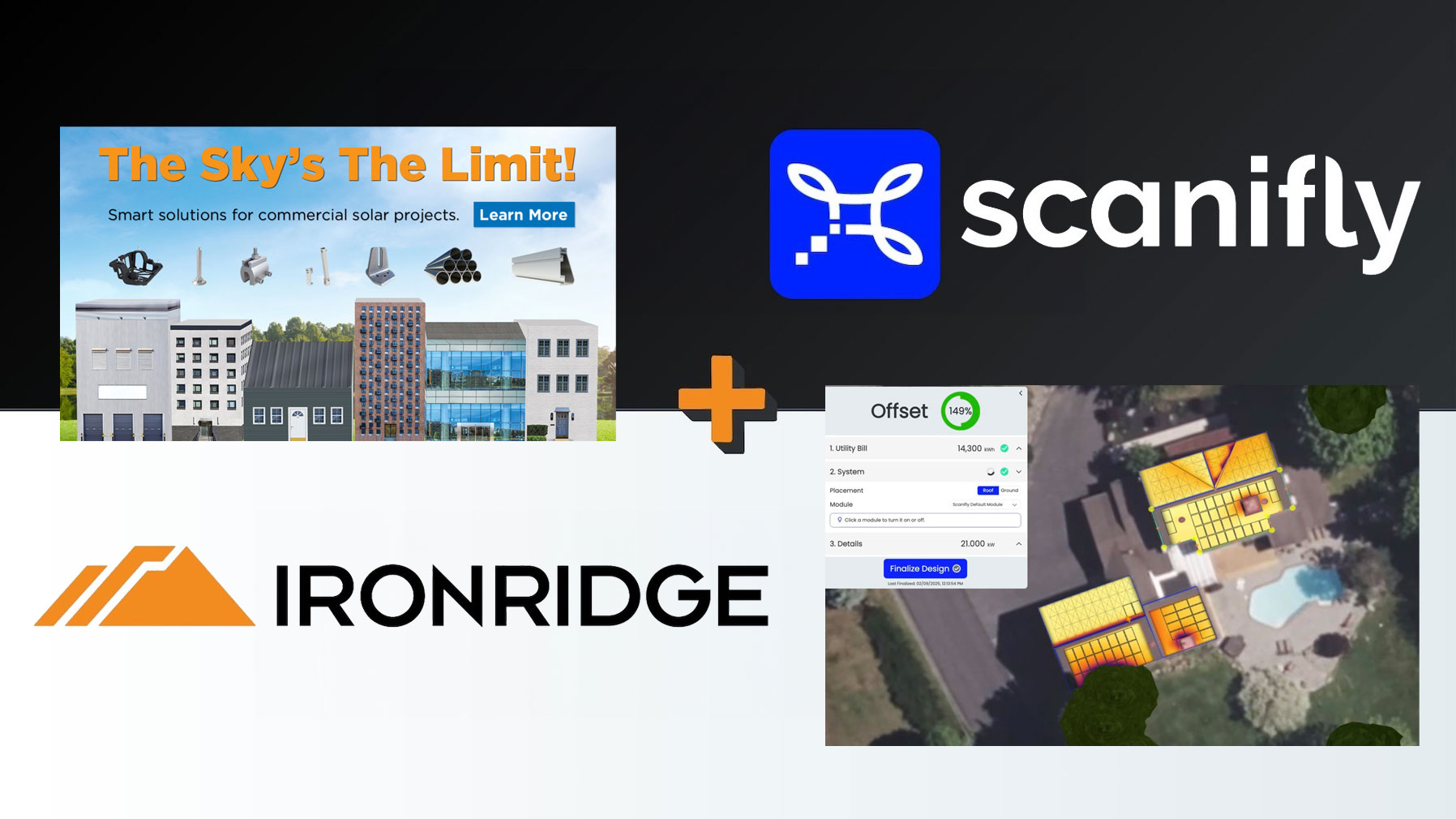
Drone based solar design is becoming a critical tool for improving efficiency across the solar industry as Scanifly and IronRidge announced a new integration that connects drone powered PV design with racking layout calculations. The collaboration is designed to eliminate duplicate work during solar project planning, helping contractors reduce design time while maintaining accuracy across increasingly complex installations.
Solar projects often involve multiple design steps that rely on the same site data, creating inefficiencies when information must be recreated or manually transferred between systems. Drone based data collection has already transformed how rooftops and sites are measured, but disconnects between design and racking tools have continued to slow workflows. This new integration aims to close that gap by linking drone derived layouts directly to racking design calculations.
By aligning aerial data, system layouts, and structural planning into a unified workflow, solar teams can move projects forward more quickly. This is especially important as solar companies face tighter margins and growing pressure to complete projects faster without sacrificing system performance or safety.
Drone Based Solar Design Reduces Redundant Workflows
Drone based solar design allows contractors to capture accurate site measurements in a single flight, replacing time consuming manual surveys. High resolution aerial imagery and 3D modeling provide the foundation for precise PV system layouts, reducing the likelihood of design errors later in the process.
The integration between Scanifly and IronRidge focuses on using those drone generated layouts as the starting point for racking calculations. Instead of rebuilding designs inside separate tools, contractors can rely on consistent data throughout the planning process. This reduces rework and minimizes the risk of discrepancies between system design and structural requirements.
As project volumes increase, eliminating redundant steps becomes essential. Drone based workflows help solar teams scale operations while maintaining accuracy across diverse site conditions, from residential rooftops to larger commercial installations.
“In 2026, when solar companies need to be more time and cost-efficient than ever, eliminating wasteful steps is critical. Scanifly’s focus is on reducing time spent in the solar workflow while never compromising on system accuracy, fitment, or maximizing production. Our integration with IronRidge delivers exactly that—connecting precise DroneDesign layouts directly to their racking calculations so contractors can move faster without sacrificing quality.” Jason Steinberg, CEO of Scanifly
Drones Help Accelerate Solar Project Timelines
The demand for faster solar deployment continues to grow as incentives, market competition, and customer expectations push contractors to improve turnaround times. Drone technology supports this shift by delivering accurate data earlier in the project lifecycle, allowing teams to finalize designs with greater confidence.
Integrating drone based design directly into racking workflows also improves coordination between engineering and installation teams. When designs are aligned from the beginning, downstream changes are reduced, helping projects stay on schedule and within budget.
Beyond speed, accuracy remains a key benefit of drone based solar design. Precise measurements help ensure proper system fitment and maximize energy production, which is critical for long term system performance. These advantages are becoming increasingly important as solar installations grow more complex.
The collaboration highlights how software integrations are unlocking more value from drone data. By connecting design tools across the solar workflow, companies can focus less on administrative tasks and more on delivering high quality installations. As drone adoption continues to expand, partnerships like this show how aerial data is evolving from a planning aid into a central component of solar project execution, with Scanifly playing a role in advancing these integrated workflows.
