

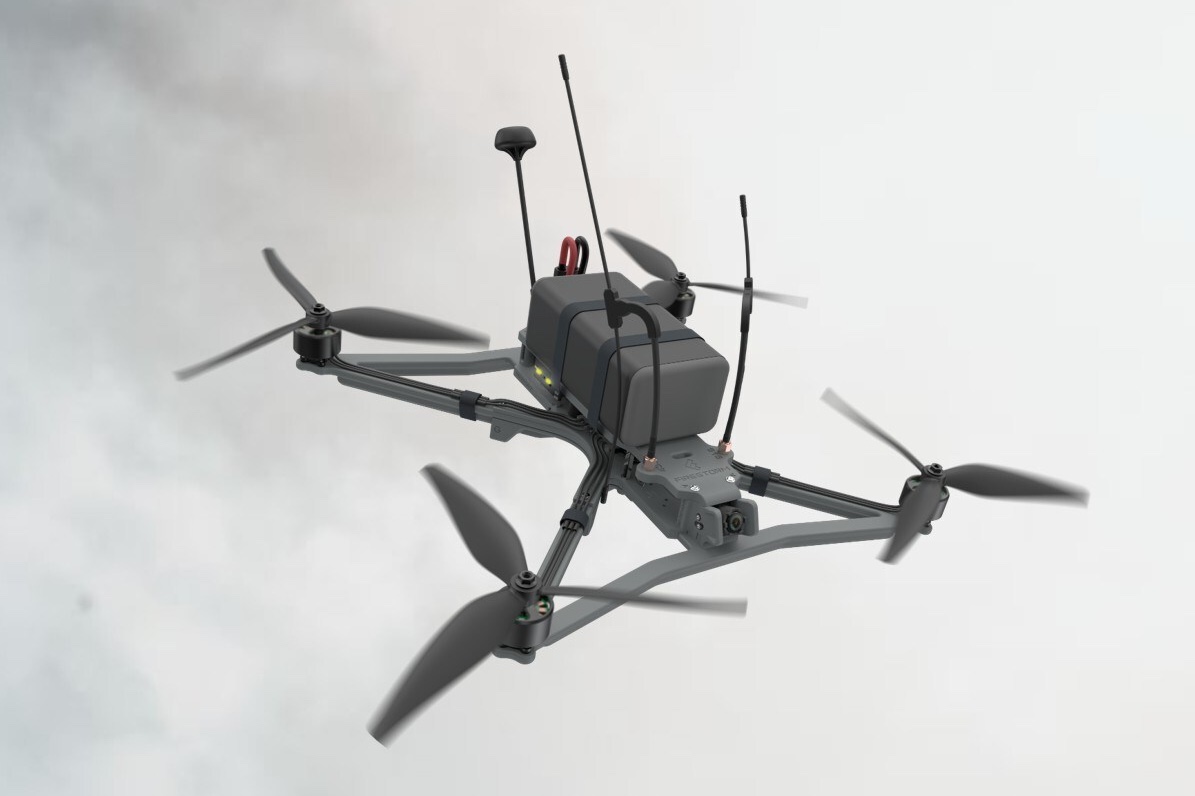
FPV drone manufacturing is the focus of a new partnership announced by Firestorm Labs, Inc. and Orqa, with the companies saying they will work together to produce the Firestorm Squall. In the announcement, Firestorm described itself as a defense technology company focused on contested logistics through expeditionary manufacturing, while Orqa described itself as a developer and manufacturer of NDAA-compliant drones. The companies said the Firestorm Squall is a Group 1 first person point of view quadcopter that combines Orqa technology with Firestorm manufacturing capabilities to meet the needs of the U.S. warfighter and allied partners.
According to the announcement, the Firestorm Squall will be U.S.-built using NDAA-compliant components. The companies said this approach is intended to pair Orqa’s drone technology with Firestorm’s U.S.-based infrastructure and manufacturing expertise. The announcement framed the partnership as a way to build and distribute unmanned aerial systems at scale for defense users, with the stated goal of providing mass-produced, affordable high-tech drones.
FPV Drone Manufacturing Focuses on U.S.-Built and NDAA-Compliant Systems
The companies said the partnership builds on a long-standing history of collaboration and is structured to support production of Firestorm Squall systems at scale. The announcement described Orqa as having frontline experience in Ukraine that informs how it designs drone components for demanding operating conditions. Firestorm described its role as providing advanced manufacturing capabilities, including its approach to expeditionary manufacturing for rapid production and sustainment.
Firestorm’s leadership emphasized the value it sees in Orqa’s manufacturing and operational experience. The company positioned Orqa’s work in FPV systems as a differentiator for customers who need reliability in high-stakes environments where equipment performance can directly affect outcomes.
“In the world of FPV technology, there’s no better manufacturer than Orqa. Their frontline experience in Ukraine enables them to create components that are second to none. If your life’s on the line, you want Orqa.” Dan Magy, Co-founder and CEO of Firestorm
The announcement also emphasized that Orqa’s drones are designed without Chinese components and that its production model is vertically integrated. Orqa described its approach as supporting supply chain sovereignty by designing, engineering, and building key components in-house. In the same section describing Orqa’s production capabilities and roadmap, Orqa was described as having capacity to produce up to 280,000 fully NDAA-compliant drones per year and a roadmap to scale further through its Global Manufacturing Partnership Program.
Expeditionary Manufacturing Supports Drone Production and Sustainment
Firestorm said its mission is to equip warfighters with mission-critical capabilities at the point of need. In the announcement, the company described its xCell platforms as containerized expeditionary manufacturing systems intended to enable production and sustainment of Firestorm’s modular, rapidly configurable UAS. Firestorm also said the same manufacturing approach can support parts, components, and full systems made by a growing ecosystem of partner original equipment manufacturers.
The partnership announcement positioned this manufacturing model as a way to support defense users who need systems produced and delivered efficiently. The companies said the combination of Orqa’s drone technology and Firestorm’s manufacturing capabilities is intended to support distribution at scale for defense customers and allied partners.
Orqa leadership described the partnership as focused on a mission-critical system and highlighted Firestorm’s manufacturing approach. The announcement said Orqa views Firestorm as a leader in UAS innovation and presented additive manufacturing as a meaningful advantage for building and delivering systems designed for operational use.
The companies stated that producing Firestorm Squall systems at scale also sets the stage for additional technology sharing and in-theater platform development. In the announcement, the partnership was framed as a step toward providing warfighters with mass-produced, affordable high-tech drones intended to meet operational needs on the front lines.
