

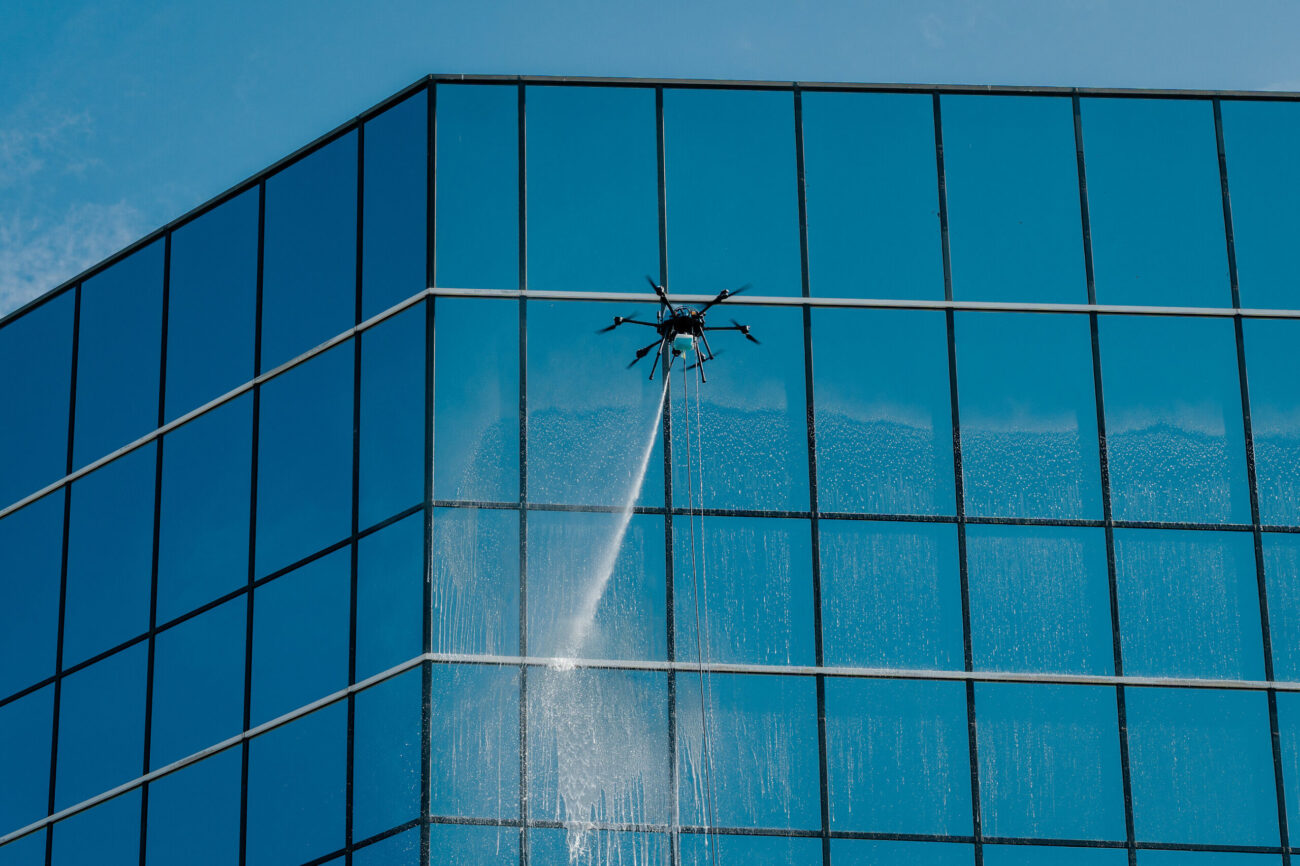
Lucid Bots has introduced the Power Tether, a ground-powered continuous flight system built for commercial cleaning and spraying drones. The company describes it as the first product of its kind in the category. Instead of asking the aircraft to carry all of its own energy, the setup supplies steady external power to the Sherpa drone from equipment sitting on the ground, which is meant to cut down the planned battery-change stops that break up longer cleaning and spraying jobs. The announcement arrived alongside a fleet milestone, with Lucid Bots operators having recorded more than 8,760 cumulative flight hours, roughly the equivalent of more than one full calendar year in the air.
That figure was measured through telemetry data as of August 17 and reflects airborne time gathered across more than 600 Sherpa drones. The company is upfront that it represents cumulative activity across its connected network rather than one continuous flight, and that not all of those hours were flown using tether power. Even with those caveats, the total offers a rough measure of how much commercial exterior work the platform is handling day to day, and it frames the problem the new system is meant to solve. The company issued the announcement from Charlotte, North Carolina, on September 1, 2026.
How The Power Tether Replaces Battery Swaps
Under conventional battery operations, the drone has to land at regular intervals so the crew can swap packs, relaunch and then reacquire the position it was working. Each of those cycles pulls attention away from the building and adds dead time to the schedule. The Power Tether moves the primary power source to the ground instead. Its air module mounts inside the Sherpa drone’s battery bay, while a ground station connects to a compatible generator. For teams handling high-rise window cleaning and similar exterior work, the result is a longer and steadier session with fewer planned interruptions and less need to plan the day around battery cycles.
“Those hours belong to our customers. A year in the air is a year of everyday businesses generating revenue and doing dangerous work faster and more safely. Too much of robotics has lived in the promise of headlines. This is customers on job sites building real companies and creating real value. The Power Tether also ends the old battery debate that has dominated our industry. Once customers try it, the data shows they don’t go back to swapping packs. Crews stay focused on the building instead of the battery clock.” Andrew Ashur, Founder and CEO of Lucid Bots
Adoption Data And Safeguards Built Into The System
Early usage patterns suggest crews take to the hardware quickly. Among customers who have logged more than an hour on the Power Tether, more than 90 percent of their flight time now runs on tether power, with batteries covering the remaining 10 percent. That split points to a default behavior rather than an occasional preference, since operators who have the system on hand appear to reach for it on the bulk of their jobs. Lucid Bots drew the comparison from customers who had already spent more than an hour flying on the tether, so the sample reflects crews with real time on the hardware rather than first impressions.
Lucid Bots says the system installs in less than 15 minutes on compatible Sherpa drone systems, which keeps setup from becoming a project of its own before work begins. Full specifications, operating requirements and purchasing information are published on the company’s Power Tether product page for operators weighing the switch. Onboard firmware tracks power draw in real time and alerts operators as they approach the system’s operating limits. If generator power drops out, an onboard battery backup supports the drone’s automatic landing sequence.
Where Lucid Bots Is Aiming The Power Tether
The company also ran a continuous flight test at its own headquarters to see how long the setup could hold up. A Power Tether-equipped Sherpa drone stayed airborne for eight hours and 48 seconds on a single generator connection, with no battery swaps at any point in the session. The company described that run as a single continuous flight rather than a series of shorter sessions stitched together. The product is aimed at commercial building maintenance work where longer flight sessions help crews keep momentum on a job, covering exterior facade cleaning, window work, hotels, institutional buildings and distribution centers.
Lucid Bots is a Charlotte, North Carolina drone hardware company and the manufacturer of the Sherpa Drone, a platform purpose built for exterior cleaning and protection applications. Backed by Y Combinator and 34 million dollars in funding, the company supports a network of more than 400 operators working across upwards of 40 states and three continents. The Sherpa Drone is designed and built in the United States, and a distinct NDAA-compliant configuration is available.
