

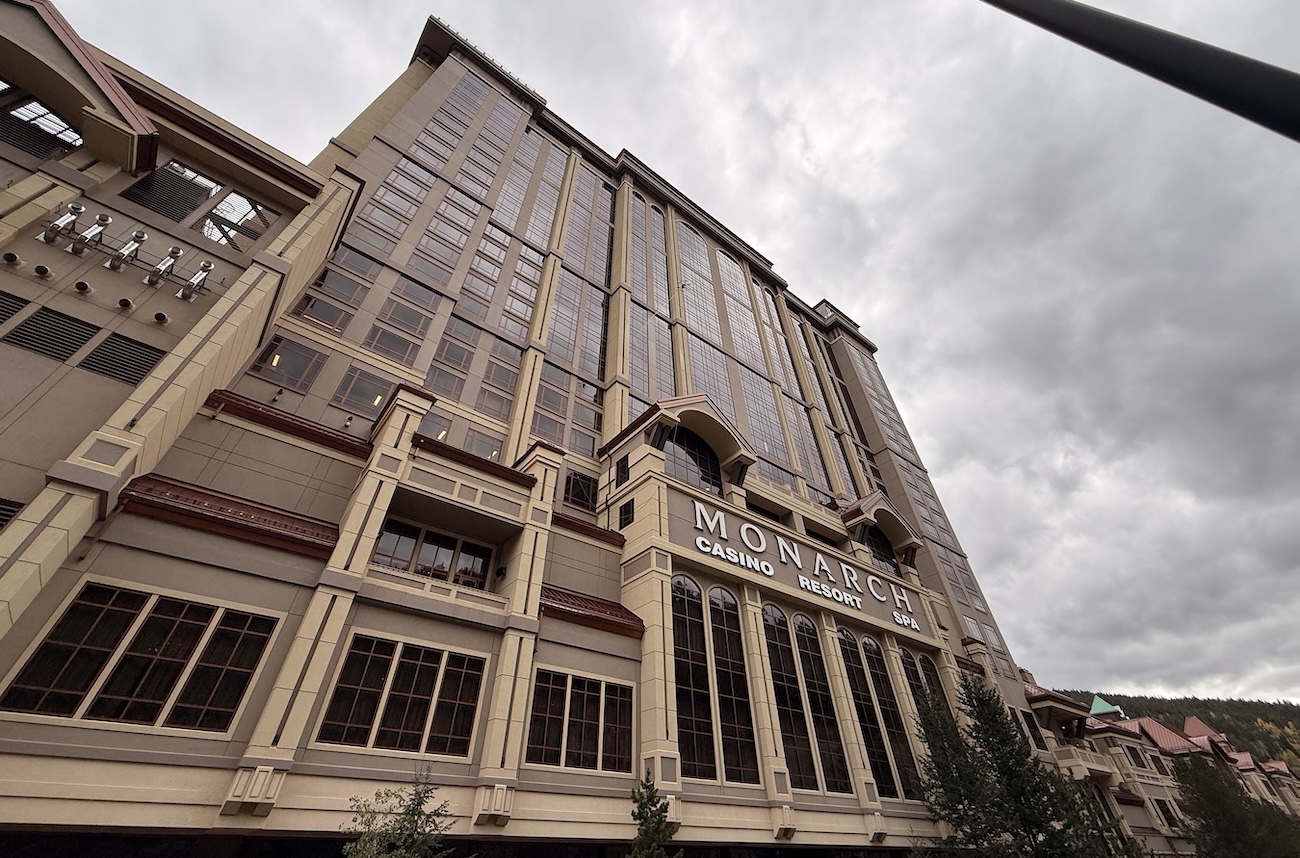
Lucid Bots has introduced the Sherpa HighLine, a software-controlled, motorized rooftop pulley system that allowed the company’s Sherpa drone to carry out exterior cleaning 280 feet above the ground at Monarch Casino Resort Spa in Black Hawk, Colorado. The Charlotte, North Carolina company announced the system on October 1, 2026, and says it is built to help cleaning businesses take on more properties, handle bigger project scopes and work more efficiently at height.
The demonstration took place in late September on the resort’s 23-story hotel tower. Lucid Bots carried out the work together with BlackJet Drone Solutions, MG Cleaning Systems and Oklahoma Drone Technologies. Rather than asking the aircraft to haul more weight into the air, the project tested a different way to extend a cleaning drone’s reach, which is to hold up the cleaning hose from the top of the building.
Why Hose Weight Limits How High Cleaning Drones Can Work
For a cleaning drone, climbing higher is about more than raw flight capability. When the aircraft is fed by a pump sitting on the ground, it also has to support the hanging hose and all of the liquid moving through it, so every extra length of hose lifted off the pavement adds to the burden. The Colorado site raised the difficulty further. Black Hawk is a mountain town sitting roughly 8,000 feet above sea level, where thinner air makes generating lift more demanding and makes managing the drone’s load even more important.
The Sherpa HighLine attaches to existing equipment on a building’s roof and shifts part of the hose’s weight onto that rooftop support. Lucid Bots notes that the drone itself weighs exactly what it did before. What changes is how much hose it needs to hold up, which lets it reach greater heights without leaning only on extra lifting power. Parker Eakins, owner of Oklahoma Drone Technologies, said the roof and launch points ruled out flying from the top down, so the team cleaned from the ground up while the HighLine supported the hose, letting them cover the building’s full 280-foot height and finish on schedule.
How the Sherpa HighLine Supports Larger Hoses and More Flow
Robert Blank, the company’s Vice President of Research and Development, said that gaining height has typically forced crews into compromises, such as trimming weight from the aircraft or switching to a thinner hose to lighten the load. He described the rooftop approach as a way out of that cycle.
“We wanted to move beyond removing a pound or two in pursuit of another 10 or 20 feet. Supporting the hose from the rooftop changes the equation. It allows us to pursue greater working heights while also supporting larger-diameter hoses that can deliver more flow.” Robert Blank, Vice President of Research and Development at Lucid Bots
A narrow line, such as a quarter-inch hose, is lighter but can restrict how much cleaning solution reaches the surface. Because the Sherpa HighLine carries the hose from above, it can make room for larger hoses and stronger flow. Paired with suitable pumps and nozzles, Lucid Bots says that setup can lead to quicker cleaning, less time on each building, healthier job margins and more capacity for additional jobs. Greater working height also gives operators more buildings to bid on and more exterior surface to clean on each property, which can expand the scope and value of individual contracts.
Sherpa HighLine Release Timeline and Operator Reservations
Andrew Ashur, Founder and CEO of Lucid Bots, described the casino job as a stepping stone rather than an upper limit.
“This is about helping our customers win taller buildings and clean more of each one, which means more revenue for their businesses. 280 feet is the highest a cleaning drone has cleaned in the United States, and we’re still going higher.” Andrew Ashur, Founder and CEO of Lucid Bots
The company has not yet named a maximum working height for the system. Lucid Bots is still testing to determine the range it can officially support, and full specifications and operating requirements will come later in development. A limited release is scheduled for the fourth quarter of 2026, with full production targeted for early 2027. Operators can hold a place in line with a $250 refundable deposit that will be credited toward the purchase price, though any sale depends on operator approval and required training. Lucid Bots says it stays involved after the sale through hands-on training, U.S.-based technical support and continued product development.
Lucid Bots describes itself as the world’s largest provider of cleaning drones and manufactures the Sherpa drone, a platform designed for exterior cleaning and protection work. Backed by Y Combinator and $34 million in funding, the company serves more than 400 operators across more than 40 states and three continents.
