

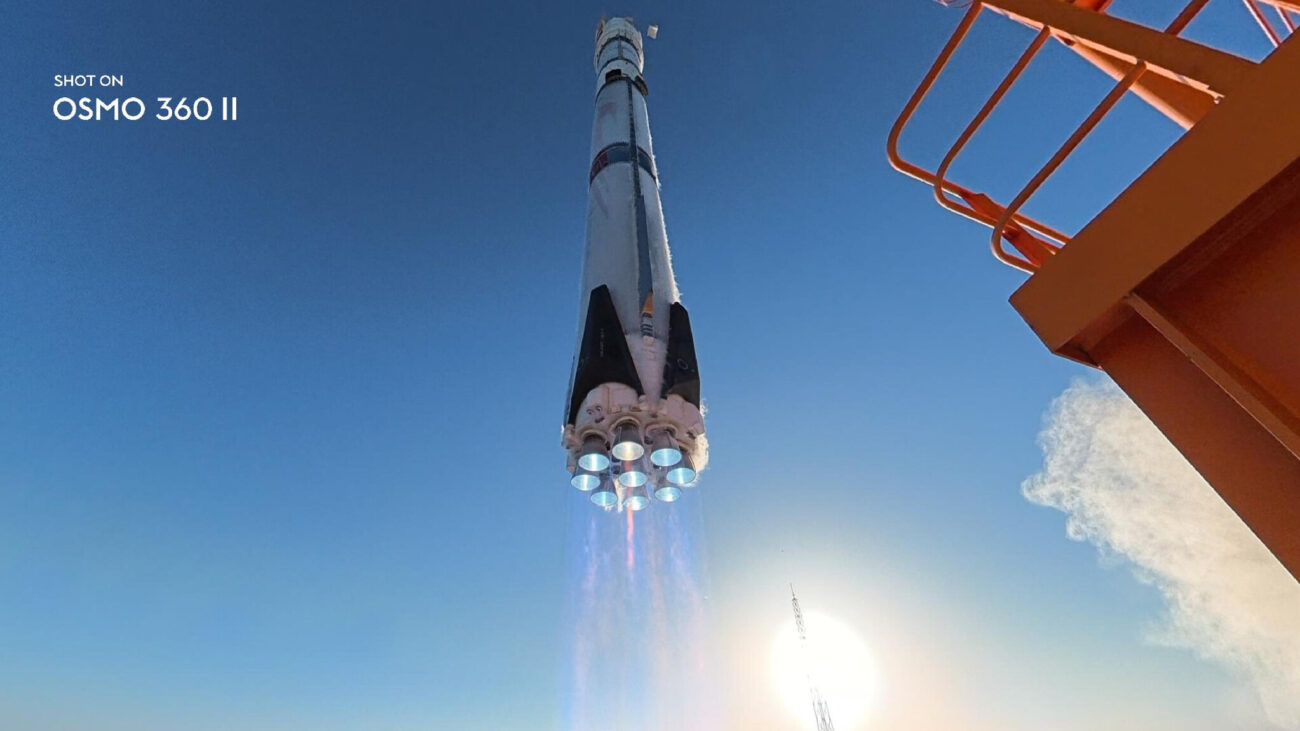
The Osmo Action 6 has become the first consumer-grade action camera ever used to record a space rocket’s launch and recovery, and it did so without a single special modification. DJI announced the milestone on August 31, 2026, revealing that twelve of the cameras rode the first-stage body of the reusable Zhuque-3 rocket built by LandSpace, a privately owned commercial aerospace company. The cameras left Earth, endured the violent trip through the atmosphere, and returned intact with complete first-person footage of the entire mission.
What the cameras brought back is unlike anything captured before. Instead of the familiar one-way, space-perspective recordings, the footage follows the rocket itself from ignition and liftoff, through its journey across the atmosphere, all the way down to landing and recovery. DJI, the global leader in civilian drones and creative camera technology, also deployed its wider ecosystem of imaging devices at the launch site, including the upcoming Osmo 360 II, to build a filming network that stretched from the sky to the ground.
How the Osmo Action 6 Survived 500°C in Space
Riding a rocket is about as hostile as conditions get for any camera, let alone a mass-produced consumer model. During both ascent and return, aerodynamic heating pushes the surface temperature of the rocket body to roughly 400°C to 500°C. At the same time, the engine and the flight itself generate constant high-frequency, high-intensity vibration. The trip through the atmosphere adds one more obstacle, a communication “blackout zone” where all contact with the outside world is completely lost.
The Osmo Action 6 handled all of it. Its integrated high-strength structure allowed the camera to survive the heat and shaking, while its onboard direct-recording capability sidestepped the blackout zone entirely, since nothing needed to be transmitted in real time. Every piece of high-definition data made it back to the ground fully intact. The cameras were fixed at different critical positions on the first-stage body, and DJI notes on the Osmo Action 6 product page that the camera pairs a 1/1.1-inch custom square large-format sensor with recording of up to 4K/120fps and 13.5 stops of high dynamic range, specs that proved essential in the extremely complex lighting of spaceflight.
That sensor and dynamic range let the camera adapt from intense high-altitude sunlight to low-altitude backlighting and even sand and dust, preserving rich highlight and shadow detail throughout. A new-generation stabilization algorithm filtered out the image shake caused by the rocket’s vibration without over-cropping the frame, so the footage stayed smooth and coherent even through high g-loads and the large maneuvers of first-stage attitude adjustments. Key high-speed moments, including the engine’s ignition, grid-fin attitude adjustments, and the landing cushioning, all came through clearly. For commercial spaceflight companies, where reusability is a central way to cut costs, that high-fidelity native footage gives aerospace engineers a new tool to review the recovery process, assess the condition of the first-stage body, and replicate what worked.
DJI Drones and Cameras Formed the On-Site Filming Network
The rocket-mounted cameras told the story from the vehicle’s point of view, but DJI’s full product ecosystem covered every other angle. The DJI Mavic 4 Pro handled aerial photography above the site, while the DJI Matrice 4TD provided thermal imaging and monitoring from overhead. Together, the two drones delivered high-altitude situational tracking of the launch as it unfolded.
On the ground, DJI’s newest handheld hardware filled in the rest. The upcoming Osmo 360 II captured panoramic 360-degree imaging of the event, recording 8K/60fps panoramic shots of the launch on-site. The camera is one of the products DJI has been preparing to debut in Europe, as covered in earlier reporting on the Osmo 360 II and the rest of the company’s Berlin lineup. Rounding out the network, the Osmo Pocket 4P recorded cinematic-quality behind-the-scenes footage from the ground.
With multiple perspectives and no blind spots, the combined network of drones and cameras documented a genuine moment in aerospace history. DJI has spent two decades expanding from civilian drone innovation into fields such as renewable energy, agriculture, public safety, surveying and mapping, and infrastructure inspection. A camera that can leave the planet, endure 500°C, and come home with every frame intact now sits alongside those efforts as one of the company’s most dramatic demonstrations yet.
