

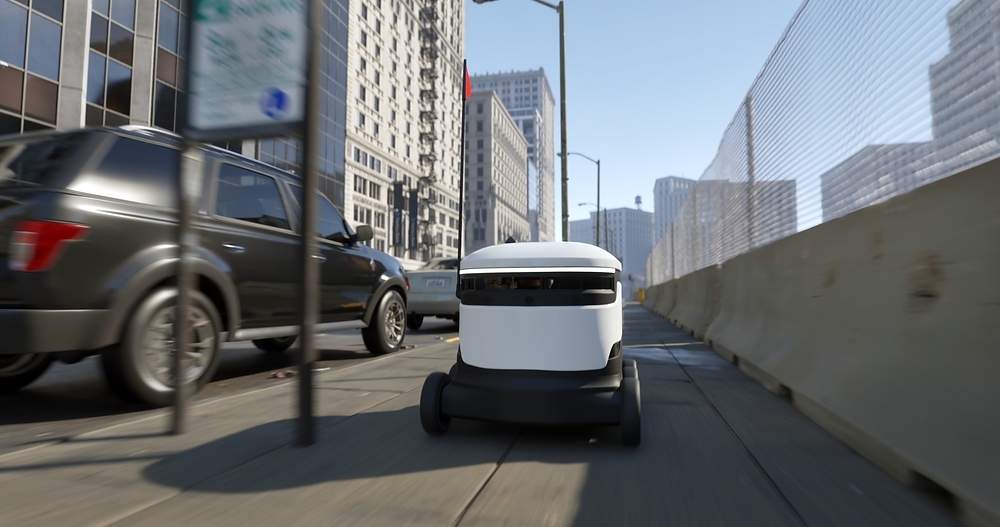
FocalPoint S-GNSS, the satellite positioning software that Cambridge-based FocalPoint Positioning originally developed for the automotive market, is moving into a new group of machines. The company announced on November 24, 2026, that it is expanding the technology into smart cities and robotics, with a focus on the autonomous and connected systems now grouped under the label of physical AI. FocalPoint named delivery drones, mobile robots, and micromobility platforms as the main examples of where it wants the software to go next.
The expansion targets a set of problems that tend to appear once autonomous machines leave controlled test areas and enter busy, unpredictable spaces. In dense urban areas, tall buildings bounce satellite signals around before they reach a receiver, creating multipath errors that cut into positioning accuracy. Thick foliage and other obstacles can weaken those signals or block them completely, and receivers are facing a growing risk from jamming and spoofing. Robots bring an extra complication of their own, because many are designed so compactly that there is little room left to mount an antenna in a good position.
How FocalPoint S-GNSS Handles Multipath and Spoofing
At the heart of FocalPoint S-GNSS is Supercorrelation, a signal processing method that FocalPoint applies directly at the GNSS receiver level. According to the company, the technique improves accuracy in locations where multipath is common, makes receivers more resistant to spoofing and jamming, and helps recover performance on devices where the antenna sits in an awkward spot. The company has built a dedicated S-GNSS offering for physical AI around mobile robots, delivery drones, and micromobility platforms. FocalPoint says the approach runs on receiver hardware that already exists, which means manufacturers do not have to add extra sensors to their designs to take advantage of it.
FocalPoint argues that reliable positioning sits underneath almost everything an autonomous machine is expected to do, from navigation and location-based services to operating safely around people. The announcement uses two scenarios to explain what is at stake. In one, a delivery robot has to decide when it is safe to cross, and in the other, a robotaxi is fed false position data by a spoofer. Spoofing and jamming are recurring concerns for any platform that depends on satellite signals, a theme that also runs through earlier coverage of GPS-denied drone navigation on this site. The company notes that in situations like these there is nobody behind the wheel to notice the mistake and correct it before something goes wrong.
“Our technology gives autonomous systems a sharper understanding of where they are, helping them navigate complex environments safely. We’re excited to bring our years of experience in automotive to this next generation of intelligent machines.” Scott Pomerantz, CEO of FocalPoint Positioning
Automotive Roots and the STMicroelectronics Partnership
The move into robotics builds on a product line that FocalPoint describes as already established in the automotive sector. S-GNSS Auto is commercially available as a firmware upgrade through the company’s collaboration with STMicroelectronics, and it is integrated with ST’s Teseo GNSS receivers, including the Teseo V and Teseo VI devices. FocalPoint says the automotive version provides the accuracy needed for vehicle autonomy in urban canyons and on forest roads, while helping OEMs push forward with ADAS and V2X features. Extending FocalPoint S-GNSS to drones and robots carries that same receiver level approach into machines that face many of the same signal challenges.
Alongside the physical AI expansion, FocalPoint is working with chipset manufacturers to bring a separate product called Precise+ to market. The company says Precise+ is designed to deliver sub-metre accuracy for demanding applications, specifically naming agricultural and construction machinery as intended uses. Both efforts sit next to the company’s automotive business, where its software is already commercially available to vehicle makers through ST hardware.
FocalPoint plans to attend CES 2027 in Las Vegas from January 6 to 9, where it is inviting attendees to book meetings with its team. The company is headquartered in Cambridge, UK, has received a strategic investment from GM Ventures, and has earned several awards and recognition from both the Royal Institute of Navigation and the Institute of Navigation for its work on GNSS reliability in difficult environments.
