

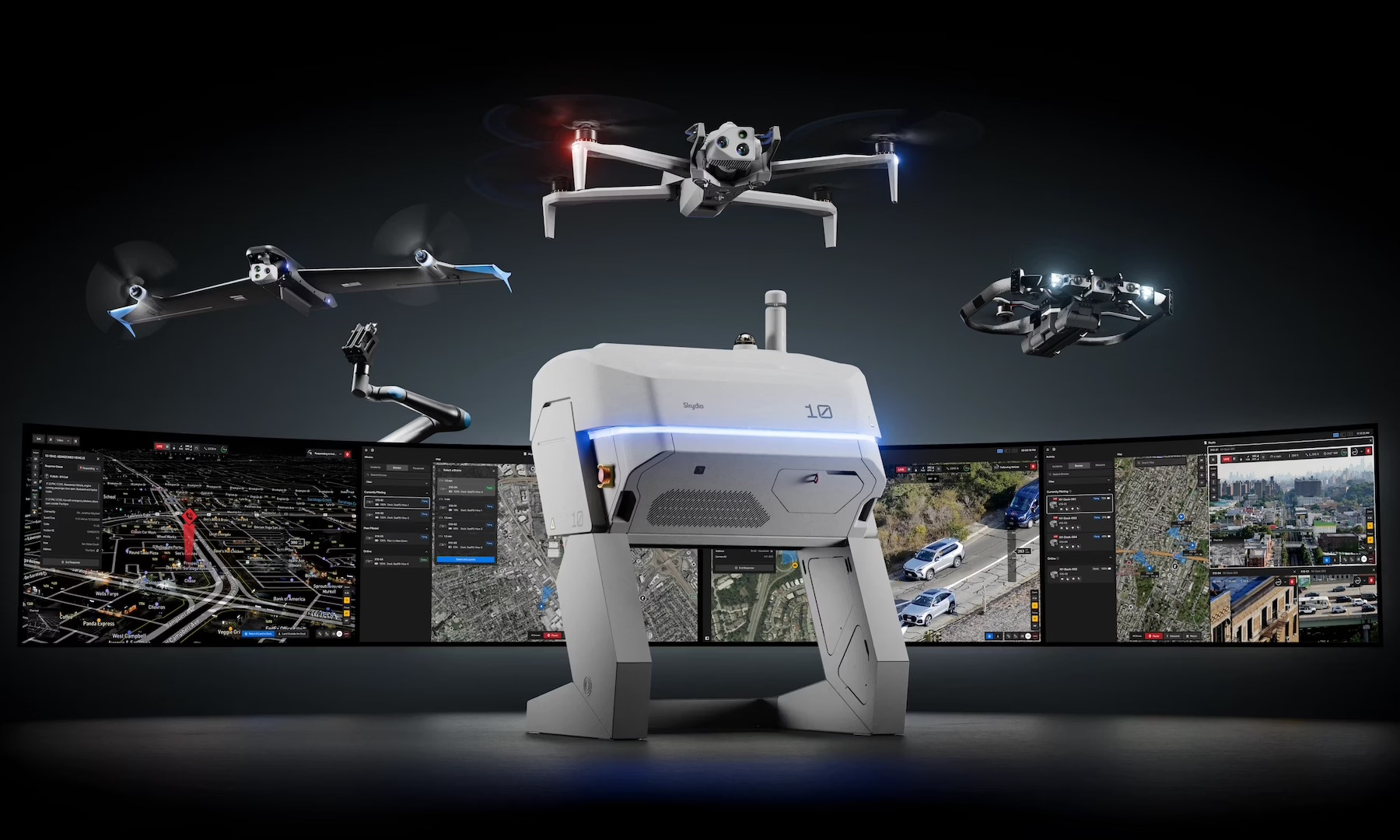
Drone as first responder systems are becoming more connected to real world emergency workflows, and Skydio says its DFR Command software platform has now processed more than 10 million calls for service. That number matters because DFR programs live or die on speed and coordination. If a drone can launch quickly but the operator has to jump between tools to understand what is happening, valuable seconds get lost. Skydio positions DFR Command as the operational backbone for agencies running DFR, with its Flight Deck interface bringing live calls for service directly into the same screen used to manage missions and fly Skydio drones.
Skydio says the platform currently integrates with more than 25 public safety systems across Computer Aided Dispatch, next generation 911, gunshot detection, automatic license plate readers, body worn cameras, digital evidence management, and real time crime center platforms. The idea is straightforward. When information is already flowing through tools an agency uses every day, the drone program can plug into those same feeds so operators do not have to retype addresses, copy incident details, or wait for manual handoffs before launching an aircraft.
A key piece of that workflow is Computer Aided Dispatch integration. Skydio says agencies can receive CAD incidents directly inside DFR Command from providers that include Motorola PremiereOne, CentralSquare, Hexagon, Tyler Technologies, Mark43, Versaterm, and others. By embedding those incidents into Flight Deck, the platform is designed to reduce the friction between dispatch and drone deployment so a drone can be launched quickly when a call comes in. Skydio also describes features such as creating real time augmented reality markers when calls arrive, helping operators direct drones to the incident without manually entering locations.
Drone as First Responder Drones Get Faster Through NG911 and Automated Alerts
Skydio also highlights next generation 911 integrations aimed at surfacing information before an incident is formally created in CAD. In these setups, DFR Command can integrate with NG911 enabled call intelligence platforms and create geo located markers from active emergency calls. Skydio lists current integrations that include Prepared, RapidSOS, and Live911, and says these capabilities can reduce drone response time by several minutes by getting information into the DFR workflow earlier.
One reason this matters is that early aerial awareness can change how responders approach a scene, especially when details are unclear during the first moments of a call. In the press release, Skydio includes a statement from a public safety leader describing how a tightly integrated system can shorten the time from call to drone on scene.
“Our response time is under sixty seconds. So while you are still typing the call into the CAD in another jurisdiction, we’ve already got the drone on the scene of the call,” Captain Abrem Ayana, Brookhaven Police Department
Beyond CAD and NG911, Skydio says DFR Command is designed to act on automated signals from other systems that can indicate an incident is unfolding. Examples listed include SoundThinking for gunshot detection alerts, Axon Body for one click dispatch tied to an officer request, DedroneBeyond for responding to unauthorized drone threats, and license plate alerts using ALPR integrations. Skydio also points to an open API approach so agencies can connect additional systems that matter to their local workflows.
Drone as First Responder Drones Share Video, Support RTCC Workflows, and Preserve Evidence
Once a drone is airborne, Skydio describes how video sharing and collaboration can stay integrated as well. The company says agencies can stream live drone footage through ReadyLink to any web browser, and that DFR Command can push live video into real time crime center systems such as Fusus, Motorola Command Aware, and STRAX, along with third party platforms that include DroneSense, Genetec, and Milestone. The goal is to keep command staff and partner agencies looking at the same live aerial view during an active call, rather than relying on delayed updates over radio or phone.
After a flight, Skydio says the platform can automatically upload media into digital evidence management systems such as Axon Evidence, supporting chain of custody auditability and CJIS compliance. That matters in real deployments because a DFR program is not just about getting a drone to a scene. It is also about handling what the drone captures in a way that fits existing evidence rules and reporting practices.
Skydio frames the 10 million calls for service milestone as evidence that its approach to integrations is working at scale. The company also emphasizes that DFR Command integrations go beyond any single vendor, pointing to CAD and NG911 coverage across multiple providers and ongoing expansion. As DFR programs grow, deeper integration may be one of the most practical ways to keep response times low while improving situational awareness for responders and dispatch.
For agencies evaluating DFR or trying to reduce launch time and tool switching during active incidents, this update shows how Skydio is positioning software integrations as the core of a modern drone as first responder program, not an add on feature.
