

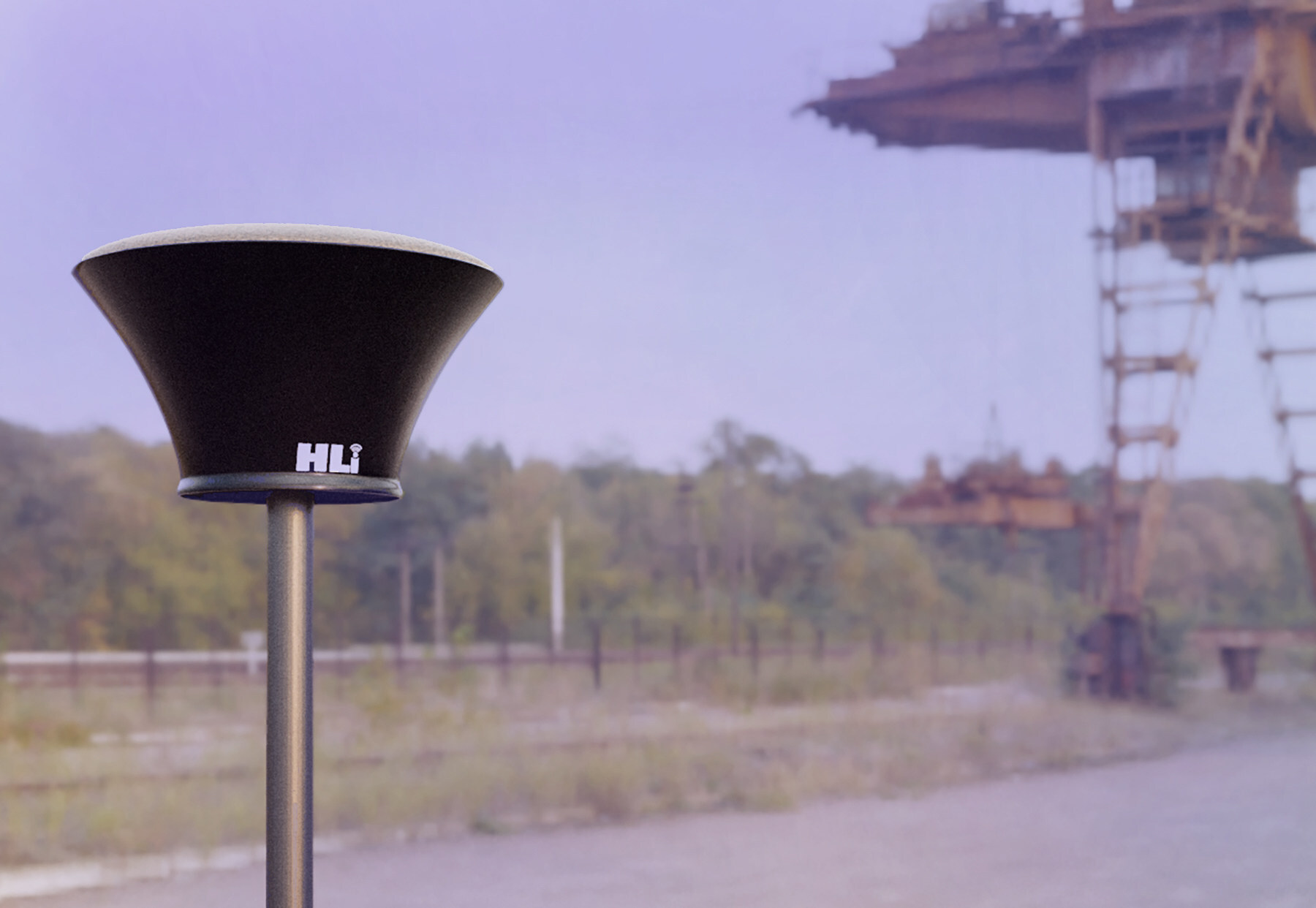
Hall Lidar Inc., a developer based in Bozeman, Montana, has introduced a new acoustic sensing product aimed at the growing counter-UAS market. The company announced its UDL-64 system, short for Ultimate Drone Listener, as a first-generation platform built for real-time three-dimensional awareness of aerial threats. By using sound rather than signals, the Hall Lidar drone detection approach gives operators a new way to track unwanted aircraft in environments where traditional tools tend to fall short.
The UDL-64 operates entirely through passive sound capture. It does not rely on radio frequency, GPS availability, or clear lines of sight, and it emits no signals of its own. That means the system stays hidden from adversaries while still producing detailed location data. According to the company, acoustic signatures also cannot be spoofed or masked the way electronic transmissions can, which creates a more resilient form of monitoring for sensitive sites.
How Acoustic Sensing Powers Hall Lidar Drone Detection
Traditional tools used to watch for drones each have notable gaps. Radar performance can be hurt by terrain and aerial clutter, while radio frequency based products struggle with autonomous drones that do not transmit signals. Optical systems depend on having a clear line of sight, which is not always possible in busy or enclosed areas. The UDL-64 takes a different path, listening for the unique rotor sounds produced by small aircraft.
At the core of the platform is a high-density microphone array paired with edge-based artificial intelligence. Real-time beamforming isolates and tracks threats across defined sectors, while trained models classify drones by their rotor signatures. This form of drone detection is designed to filter out common environmental noise such as wind, vehicle traffic, and general urban activity, which helps reduce false alerts. When several units are networked together, they provide triangulated positioning for full three-dimensional tracking.
“Customers should not have to choose between performance and security. We’ve built a system that delivers both—advanced AI-based acoustic detection with the assurance of American manufacturing and supply chain integrity.” David Hall, CEO and Head Scientist, Hall Lidar
Design, Power, and Deployment Options
The Hall Lidar drone sensor measures roughly 24 inches across, giving it a compact footprint that can be set up within minutes. Operators can mount the unit on a tripod for temporary work or install it on a mast for longer deployments, which makes it suitable for both mobile teams and fixed-site defense positions. The enclosure is weather resistant, and the platform has no moving parts, supporting long-term use in harsh conditions. The sensor housing has been engineered to enhance sound capture and directionality.
Power flexibility is another key element of the design. The system can run on battery, solar, or external power, giving users freedom to deploy in locations without reliable infrastructure. Built-in Wi-Fi, Bluetooth, and 5G connectivity let the UDL-64 feed information into broader command and control networks. In standalone mode, a single unit detects targets at ranges of up to 200 meters, and networked units can expand coverage to approximately 500 meters with persistent three-dimensional situational awareness across a defined area.
Hall Lidar Leadership and Target Markets
Hall Lidar presents the UDL-64 as a fully American-made alternative to international acoustic detection products. The company says the Hall Lidar drone detection system is designed, engineered, and manufactured in the United States, and further details on the platform are posted on the company’s website. An optional integrated optical module is also available so that operators can visually confirm a detected target, creating a layered sensing approach without giving up the platform’s covert posture.
The company was founded by David Hall, a serial inventor who holds more than 100 patents and was named the 2018 Inventor of the Year by the Smithsonian Foundation. His earlier work includes foundational development in LIDAR, acoustics, marine stabilization, electric-magnetic propulsion, and AI enabled detection and neutralization systems. Hall Lidar has outlined use cases that include civilian airports, energy facilities, transportation hubs, and arenas, with the small profile also suiting discreet monitoring where operators need to avoid drawing attention.
