

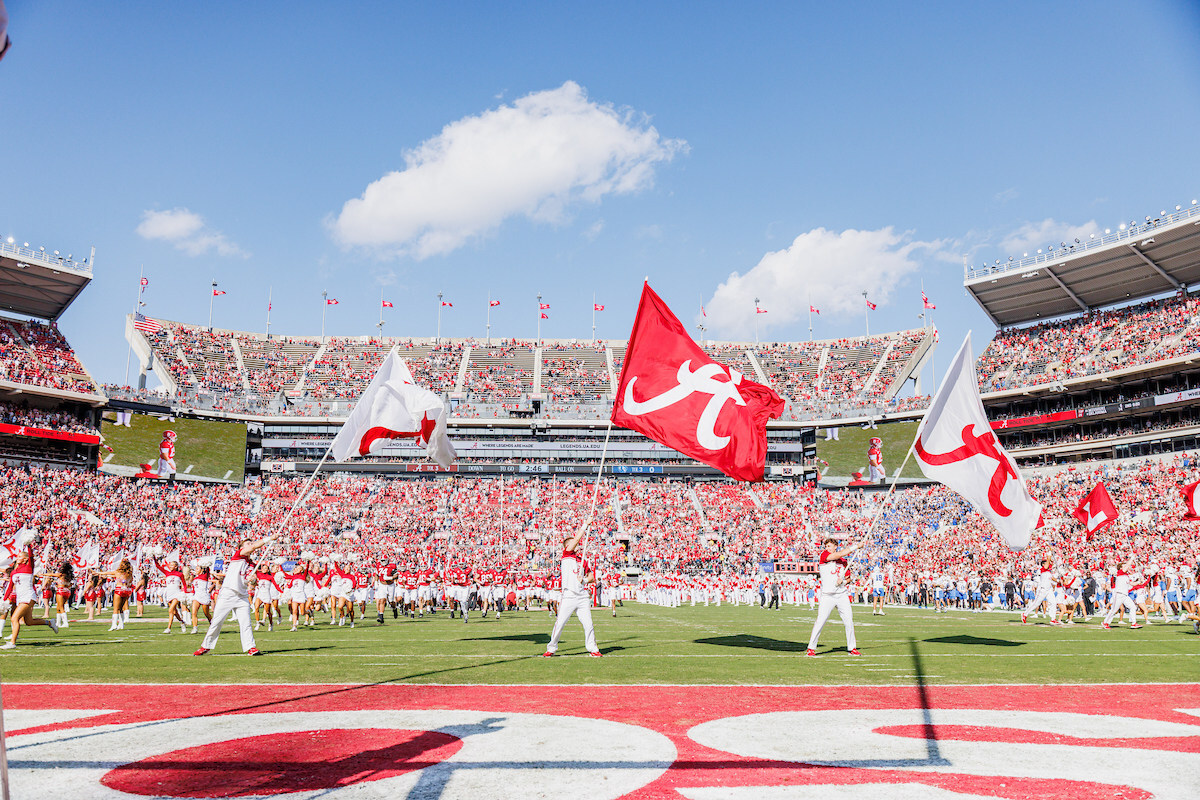
The University of Alabama has selected D-Fend Solutions as its counter-drone technology supplier, a move aimed at protecting the sprawling Tuscaloosa campus and the massive crowds that gather for football Saturdays. The school will deploy the EnforceAir counter-drone system to monitor and respond to unauthorized flights over academic buildings, research facilities, and athletic venues.
As a Tier One R1 research institution, Alabama functions like a small city, covering 3.5 square miles with 330 buildings and close to 50,000 students, faculty, and staff. During football season, the campus swells into one of the largest population centers in the state. Saban Field at Bryant-Denny Stadium holds more than 100,000 fans, and surrounding tailgating areas, including the Quad, can draw another 70,000 people on game days.
The university evaluated several leading counter-drone platforms through season-long live performance trials before choosing the D-Fend system. Officials said they wanted a solution that could support controlled mitigation by authorized and trained personnel without the collateral risks that come with kinetic measures or signal jamming. Jamming in particular can interfere with campus communications, something a dense academic and residential environment cannot afford during a high-stakes event.
Why Alabama Picked EnforceAir Counter-Drone Technology
D-Fend Solutions uses radio frequency cyber takeover methods rather than projectiles or broad signal jamming. That approach allows security teams to identify a rogue drone, take control of it, and land it safely in a predefined location. For a campus packed with sensitive research labs, medical facilities, and broadcast equipment, the ability to respond without disrupting nearby systems was a major factor in the decision.
During one evaluation window alone, the system flagged well over a thousand drones operating in the area around campus. That figure points to how routine drone activity has become over large universities, and how quickly a single unauthorized flight can become a safety concern during a stadium event or a research operation. From an elevated mounting position, a single EnforceAir unit provided wide area detection across the main campus and the approaches surrounding it.
“D-Fend and EnforceAir have been game changers for us. Our situational awareness has expanded dramatically. Not only do we know what is in the airspace around our campus, but we have the ability to mitigate if necessary.” Michael Kelley, Director of Security Technologies at the University of Alabama
Integrating Drone Security Into Campus Operations
The university is integrating EnforceAir into its Emergency Operations Center and using a Unified Command Framework that brings together local, state, and federal partners during major events. Details on the D-Fend EnforceAir platform show the system handling detection, tracking, and mitigation through a single operator interface, which fits the kind of multi-agency coordination required on a college football Saturday. Officials described the selection process as thorough, pointing to the intuitive operator interface and the safety profile of the cyber takeover approach as deciding factors.
Universities sit in an unusual middle ground in the counter-drone conversation. They are open by design, welcoming visitors, recruits, media, and hobby flyers, yet they also host restricted research, protected health information, and packed public events. The concerns include accidental collisions, falling debris over crowds, and deliberate attempts to capture footage of restricted work. Historically, much of the public attention on stopping rogue drones has focused on airports and military bases, but large universities are increasingly adopting the same kinds of protective measures used in those environments.
Leadership Views On The Alabama Deployment
D-Fend leadership framed the selection as a sign that higher education is catching up with other sectors that have already built counter-drone programs. The company serves military, law enforcement, homeland security, and airport customers globally, and the Alabama deployment brings that same technology to a university environment with similar operational demands.
“Higher education institutions face unique challenges: open environments, major public events, critical research, and evolving regulatory frameworks. EnforceAir enables proactive, non-disruptive control that aligns with both safety and operational continuity.” Zohar Halachmi, CEO and Chairman of D-Fend Solutions
Kelley added that the school is taking an active planning posture rather than waiting for an incident to force a response. He described the approach as initiative-taking rather than reactionary, saying the university has to plan ahead and that the D-Fend technology allows it to do that. The deployment covers not only stadium events but also the day-to-day operations of the broader campus, including classrooms, dormitories, administrative buildings, and research centers.
Alabama is part of the University of Alabama System and currently enrolls a record 42,000 students. Its athletic program has 18 National Championships, and its football games regularly rank among the most attended sporting events in the country. Between that level of public exposure, the scale of its research portfolio, and the sheer size of the physical campus, the school represents the kind of complex environment where counter-drone programs are moving from optional to expected.
