

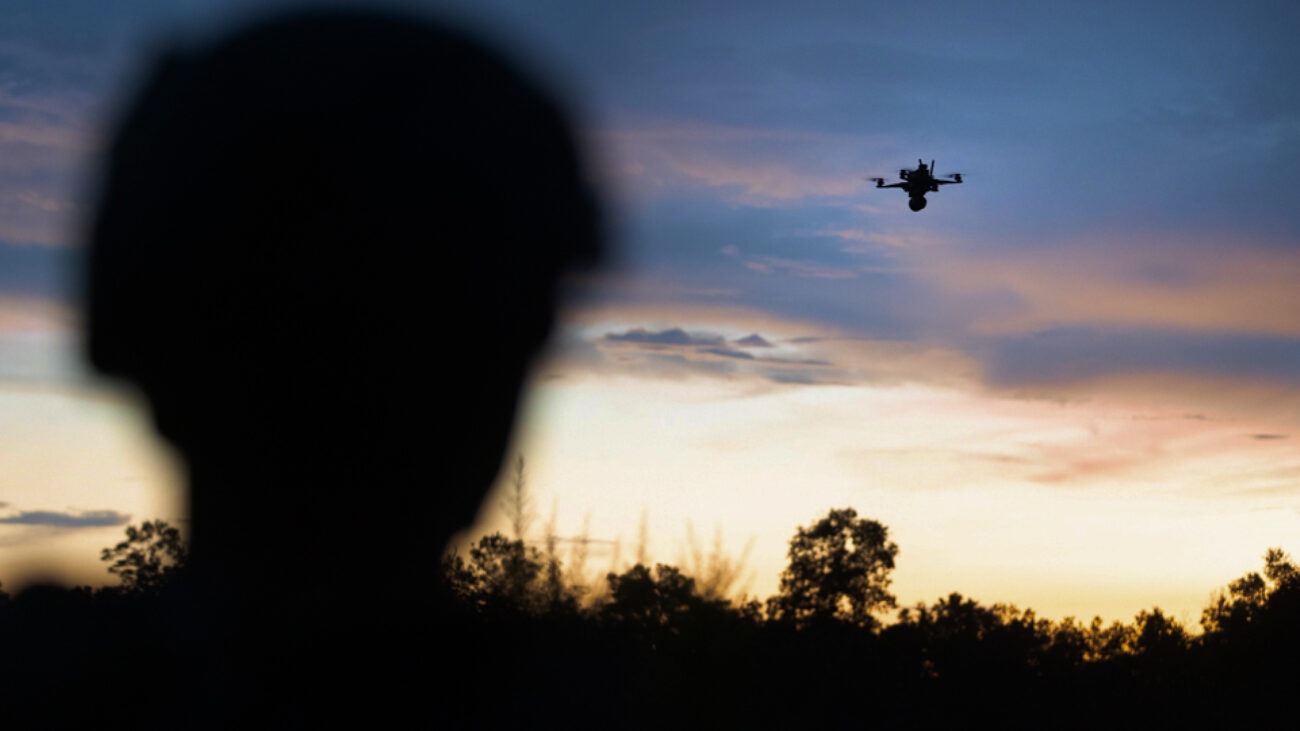
Performance Drone Works, the American defense technology company known as PDW, has announced that PDW AM drones will carry new mission autonomy software from Booz Allen. The software is powered by Shield AI’s Hivemind and is being integrated on the AM, a name that stands for Attritable Multirotor. According to the announcement, it supports autonomy-enabled mission execution, letting operators carry out parts of a mission workflow with less manual control while they keep authority over mission decisions.
Alongside the autonomy work, PDW is bringing a second Booz Allen product into its lineup. The company is integrating Booz Allen’s secure, over-the-air fleet update product across its whole aircraft portfolio, not only on PDW AM drones. PDW presents both additions as part of a strategy to move decisive capability closer to the operator and to keep systems already in the field relevant as missions change.
How PDW AM Drones Will Use Booz Allen Autonomy Software
The AM is PDW’s multi-mission Group 1 unmanned aircraft system, built to cover both reusable and attritable roles with a single platform. The Attritable Multirotor can be recovered and flown again for intelligence, surveillance, and reconnaissance (ISR), payload delivery, and other missions, and it can then be configured for attritable strike when that is required. Customers can operate PDW AM drones in the base configuration, or they can add the Booz Allen software to enable autonomy-assisted perception and operator-authorized effects delivery inside one mission workflow.
PDW says those capabilities are designed to reduce the cognitive burden on operators and help them make faster, informed decisions, while preserving their control over mission outcomes. The combined hardware and software product entered controlled testing on September 30, and general availability is planned for the first quarter of 2027. The two companies also plan to develop additional autonomous software options and to extend the mission autonomy software to PDW’s C100 in 2027. James Slider, CEO of PDW, connected the work to how quickly forces can field and update unmanned systems.
“The advantage will belong to the force that can field, adapt, and scale unmanned and autonomous systems fastest. Through our work with Booz Allen, operators gain advanced autonomy at the point of decision and a faster path to updated fielded aircraft as missions change, backed by U.S. capacity to produce and sustain their aircraft at scale. Warfighters should not have to stand by for airpower or be limited by a static capability outpaced by modern conflict.” James Slider, CEO of PDW
Secure Over-the-Air Updates for Distributed Drone Fleets
The second part of the announcement covers how software reaches aircraft once they have been fielded. Booz Allen’s fleet update product gives authorized teams a common control point for deploying software, managing configurations, and monitoring aircraft across a distributed fleet. For Performance Drone Works, the product will sit across an aircraft portfolio backed by Drone Factory 01, the company’s 90,000-square-foot facility in Huntsville, Alabama, which has an annual production capacity of 100,000 drones. The update product was built for denied, disrupted, intermittent, and limited-connectivity environments, and it is meant to maintain deployment integrity when connectivity is disrupted or limited.
Teams using the product get visibility into fleet status, configuration control, and deployment history. It supports approved applications that range from payload integration to mission-enabling autonomy. By swapping software changes made one aircraft at a time for a managed fleet workflow, it is designed to cut approved update cycles from weeks or months to hours. Randy Yamada, a vice president and autonomy lead within Booz Allen’s defense technology business, described how the two products work together.
“The Department of War needs autonomy that works at the pace of the mission. Booz Allen’s autonomy software gives unmanned aircraft onboard mission behaviors that help reduce operator burden and keep teams focused on mission outcomes, while our fleet update manager provides the secure software delivery and lifecycle management needed to update and verify those capabilities across a distributed fleet, even in contested, disconnected environments. Together, they operationalize these capable platforms that can evolve as the threat does.” Randy Yamada, Vice President and Autonomy Lead at Booz Allen
PDW plans to discuss the work in person at AUSA 2026, which runs October 12 to 14 in Washington, D.C. The company will host customer, partner, and media meetings during the event to talk about autonomy, partner integrations, and its future roadmap plans. Headquartered in Huntsville, PDW develops multi-mission aerial robotic systems for defense, government, public safety, and allied customers.
