

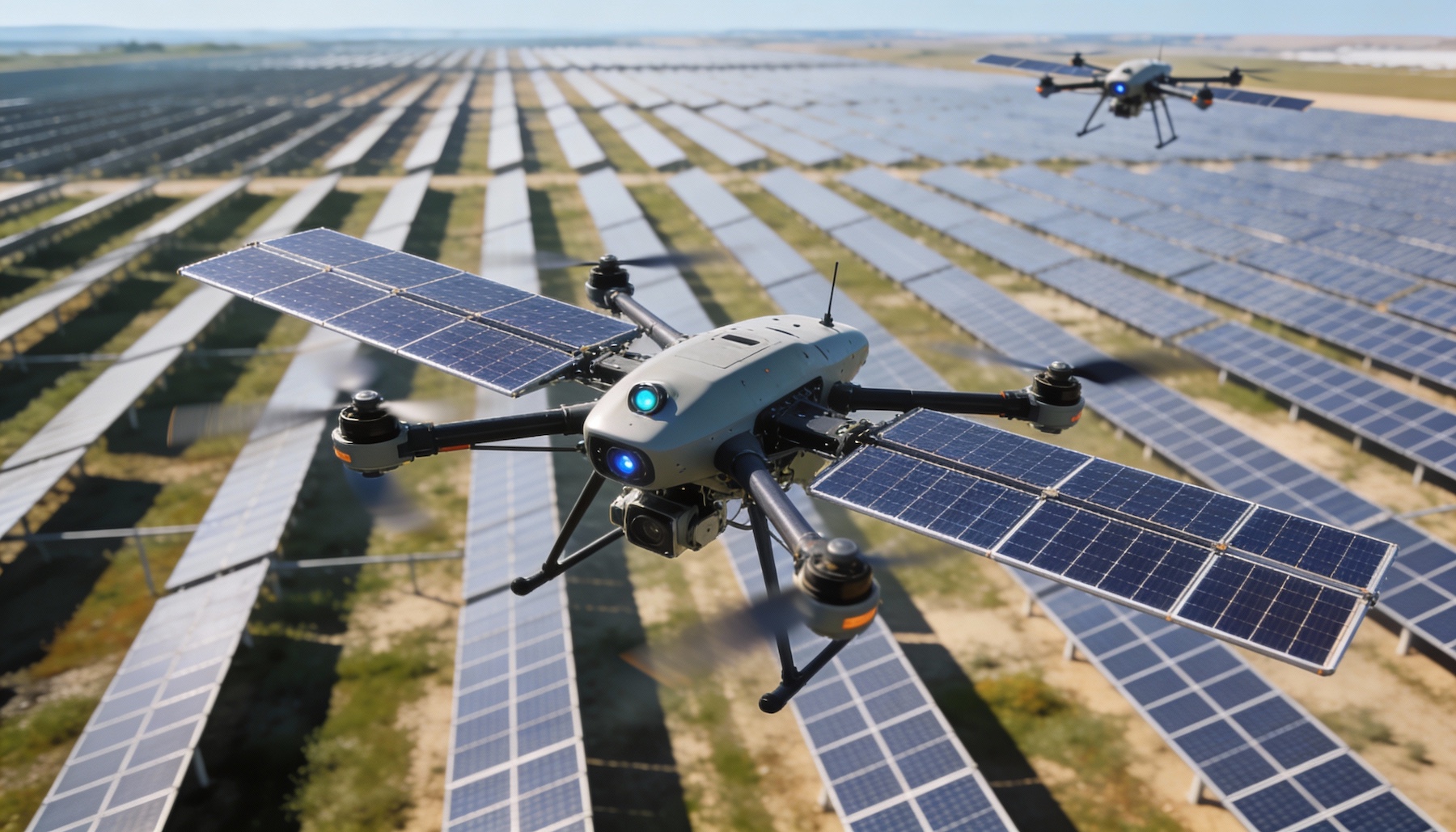
Solar drones are emerging as a key driver of a new flight economy as investors increasingly focus on UAV platforms capable of extended endurance and large scale infrastructure support. Advances in solar powered propulsion and energy management are enabling drones to remain airborne for significantly longer periods, opening new opportunities across energy, utilities, and industrial operations. This shift is drawing attention from both technology developers and financial stakeholders seeking scalable aerial solutions.
The growing interest in solar powered UAVs reflects a broader demand for persistent aerial platforms that reduce reliance on frequent landings or battery swaps. Solar drones are designed to harvest energy during flight, allowing them to support long duration missions such as infrastructure monitoring, inspection, and maintenance. These capabilities position solar powered systems as a bridge between traditional drones and crewed aviation for certain operational roles.
As the flight economy evolves, solar drones are being evaluated for their ability to support energy sector operations at scale. Utilities and facility operators are exploring how UAVs can reduce costs and improve safety when inspecting solar farms, power grids, and other critical assets spread across large geographic areas.
Solar Drones Support Commercial Scale Energy Operations
Solar drones are particularly well suited for energy and utility applications that require consistent aerial access. In solar farm environments, UAVs equipped with specialized tools can perform inspection and maintenance tasks without interrupting operations. This approach reduces downtime while improving data collection and operational efficiency.
Technology providers are developing drone agnostic systems that can be integrated across different UAV platforms, allowing operators to deploy aerial solutions without being locked into a single aircraft type. This flexibility supports broader adoption by utilities managing diverse fleets and operating environments. As solar drones become more capable, their role in maintaining large scale energy infrastructure continues to expand.
The combination of solar powered endurance and modular tooling enables drones to take on tasks traditionally performed by ground crews or crewed aircraft. This shift improves safety by reducing human exposure to high risk environments while supporting more frequent and detailed inspections.
“The launch of our universal Adaptation Kit and our expansion into power grid maintenance mark important milestones in VisionWave’s 2026 growth strategy. By delivering drone-agnostic technology capable of meeting the rigorous demands of commercial-scale solar operations and high-voltage insulator cleaning, we are removing long-standing barriers for large utility and facility management operators. Combined with our expanding distribution presence in Italy and Spain, we believe this this follow-on order positions VisionWave as a key technology provider supporting Europe’s energy infrastructure.” Douglas Davis, Executive Chairman and Interim Chief Executive Officer of VisionWave
Solar Drones Attract Investment as Flight Economy Expands
The expanding capabilities of solar drones are drawing investor interest as the flight economy matures. Long endurance UAV platforms offer potential for recurring service models and large scale deployment across energy and infrastructure sectors. This makes solar powered drones attractive for investors seeking exposure to hardware driven innovation tied to real world applications.
Solar drones also align with sustainability goals by leveraging renewable energy during operation. This reduces operational emissions while supporting extended mission profiles that would otherwise require additional resources. As energy companies and governments prioritize efficiency and sustainability, solar powered UAVs offer a compelling combination of performance and environmental alignment.
Distribution expansion and international partnerships are further accelerating adoption. By supporting deployment across multiple regions, technology providers are positioning solar drones as core tools within modern energy infrastructure strategies. These developments reinforce the view that long endurance UAVs will play an increasingly important role in the global flight economy.
As solar drones continue to unlock new operational models, their impact is expected to extend beyond energy into other sectors that require persistent aerial presence. The convergence of endurance, automation, and scalable deployment is reshaping how drones are used, with companies like VisionWave contributing to the evolving landscape of solar powered UAV technology.
