

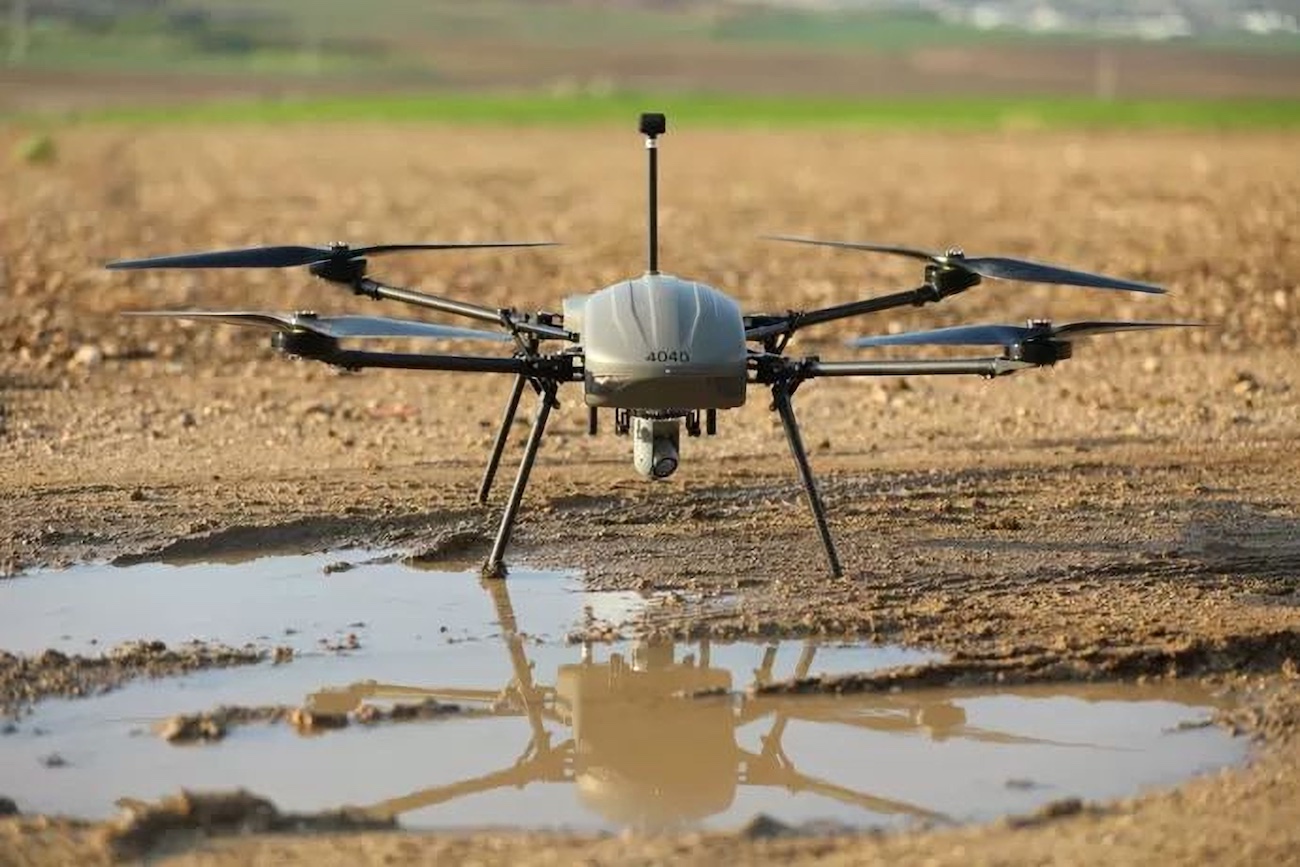
Mistral Inc. has secured a U.S. Army contract worth $20,039,666 to deliver the THOR drone and a range of mission payloads to the service’s Small Uncrewed Aircraft Systems Product Office. The firm-fixed-price award positions the company to support tactical formations at the company level with a rapidly deployable, backpack-portable aerial system. According to the announcement, Army Contracting Command at Redstone Arsenal in Alabama issued the contract, which carries an estimated completion date of March 17, 2027.
The award, identified as W58RGZ-26-G-0026, calls for Mistral to provide THOR uncrewed aircraft systems together with a variety of payload options intended to strengthen small unit operations. The program aims to give soldiers an organic, rapidly employable aerial capability that aligns with company-level mission needs. Mistral is based in Bethesda, Maryland, and serves as a defense contractor supporting the Department of Defense and other government customers with advanced systems and integration services.
THOR Drone Designed for Soldier Level Tactical Use
The THOR drone is described as a fully autonomous, multi-rotor mini UAS in the Group 2 class. It is designed for a broad set of tactical missions, including reconnaissance, surveillance, target acquisition and identification, communications relay, electronic warfare support, resupply and cargo movement, and configurable effects options. Operators can carry the platform in a backpack and assemble it on site, giving small teams an aerial tool that moves with them through varied terrain. The platform fits within a wider trend of company level aerial capability already seen in another recent Army UAV contract issued through Redstone Arsenal earlier this year.
According to the press release, the THOR drone is engineered to reduce operator workload through autonomous takeoff and landing, multi platform operation, and onboard mission execution. Modular payload integration allows units to swap the aircraft between roles in the field as conditions change. That flexibility is meant to support evolving mission profiles without requiring operators to learn or carry separate platforms for every task. Mistral has positioned the system as a production ready capability that can move quickly from contract award into the hands of operational units.
Mistral and FUSE Bring the System to U.S. Forces
Mistral has teamed with FUSE, the developer of the THOR family of military tactical Group 2 drones. FUSE, formerly known as Flying Production, is a subsidiary of Elbit Systems C4I & Cyber, which is described as a developer of AI driven autonomous combat systems and mission critical unmanned solutions delivered at scale. Under the contract, Mistral will integrate the various mission payloads onto the THOR drone airframe and manage delivery to the Army’s small UAS enterprise, with specific work locations and funding established with each individual order. Local training along with field and technical support will be provided through Avandra.Ai, a U.S. based subsidiary of FUSE, an approach consistent with Mistral’s broader UAV solutions portfolio.
Yoav Banai, Senior Vice President of Business Development at Mistral, framed the deal as a way to put a fielded system into the hands of soldiers quickly while keeping it suited to real world tactical conditions. He emphasized that pairing Mistral’s domestic integration and delivery focus with FUSE’s airframe places the team in position to deliver a Group 2 UAS that supports multi mission teams and adapts as operational priorities shift.
“This award is about getting a proven, company-relevant capability into Soldiers’ hands with speed, and doing it with a system designed for real operational conditions.” Yoav Banai, Senior Vice President of Business Development at Mistral
Yoav Poizner, Vice President, Marketing at Elbit Systems C4I & Cyber, said the Army’s decision to select THOR as its company level multi rotor system validates the operational and technological merits of the platform. He added that the team is positioned to deliver a dependable system that can be configured for evolving mission needs and scaled for operational demand. The contract structure leaves room for the small UAS enterprise to place additional orders as it evaluates field performance and refines requirements throughout the period of performance.
