

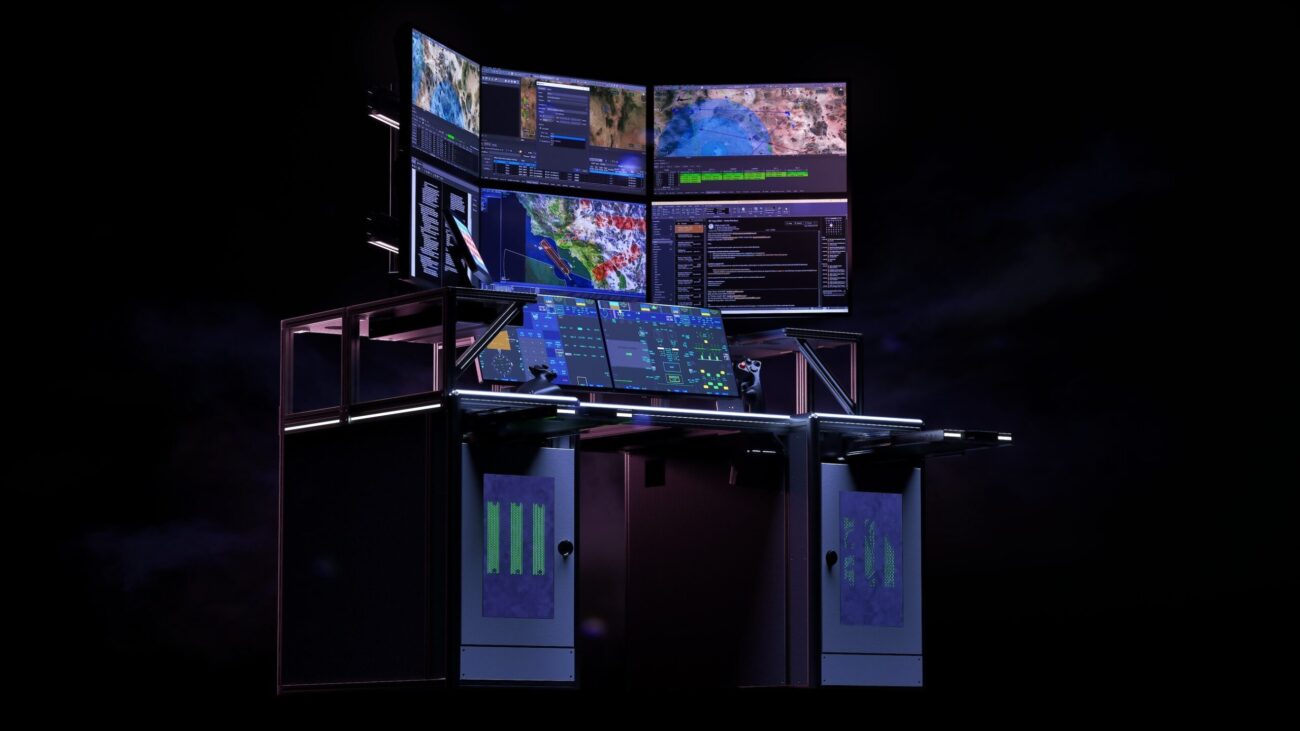
The U.S. Navy reached a notable milestone in its unmanned carrier aviation program when Lockheed Martin Skunk Works’ MDCX command and control platform guided the inaugural flight of the MQ-25A UAV. The flight took place from MidAmerica St. Louis Airport in Illinois and used software that the company describes as the backbone of the Navy’s plans for autonomous tanker operations launched from aircraft carriers.
According to the press release, the MDCX platform serves as the foundation of the Unmanned Carrier Aviation Mission Control System, known as UMCS, which powers the Navy’s MD-5 Ground Control Station. Lockheed Martin was selected to provide the ground control component for Boeing’s MQ-25A in 2020, and this initial flight marked the first time the integrated system commanded the aircraft in the air. The company described the result as a historic event for both partners and the U.S. Navy.
How the MQ-25A UAV Connects to the Navy’s Air Wing of the Future
The MQ-25A UAV, also known as the Stingray, is being developed to provide aerial refueling support for carrier based aircraft, and its successful first flight under MDCX control represents a step toward broader integration of uncrewed platforms in naval aviation. Lockheed Martin describes MDCX as an open architecture C2 solution, which allows it to operate as a foundational layer for additional unmanned systems beyond the Stingray.
Officials emphasized that the demonstration showed how a single ground control station can be used to command unmanned aircraft tied to carrier operations. The same broader Lockheed Martin portfolio that supports MDCX has produced other autonomous and sensing initiatives, including the EMBERPOINT venture aimed at wildfire detection and response. The Navy has identified this carrier focused approach as central to its Air Wing of the Future concept, where command teams could direct multiple uncrewed vehicles alongside crewed aircraft using shared infrastructure.
“Today’s successful first flight relied on the seamless integration between a MQ-25 aircraft and Lockheed Martin’s ground control station. This milestone proves the strength of our partnership in developing the command-and-control infrastructure necessary to operate unmanned platforms safely and effectively from our carriers.” Rear Adm. Tony Rossi, Program Executive Office for Unmanned Aviation and Strike Weapons
Skunk Works Positions MDCX as a Ready Now Capability
Lockheed Martin Skunk Works has framed MDCX as a ready now solution rather than a developmental concept still being proven. The company’s MDCX product page describes the platform as an open architecture, secure command and control and autonomy solution. According to the press release, the platform delivered secure control during the MQ-25A first flight, and its open architecture is intended to support multiple uncrewed vehicles operated from a single command station.
The flight was conducted from MidAmerica St. Louis Airport in Mascoutah, Illinois. Boeing builds the MQ-25A airframe while Lockheed Martin provides the ground software that operators use to command the aircraft. The Navy’s Program Executive Office for Unmanned Aviation and Strike Weapons oversees the broader effort, with Rear Adm. Tony Rossi leading that organization. The release describes the achievement as the latest proof point of MDCX delivering open architecture, secure command and control, and autonomy capability.
“Our MDCX open architecture C2 solution integrated seamlessly with a Boeing MQ-25A, delivering secure UAV control for its first flight. This achievement is a result of our enduring partnership with the U.S. Navy to expand its capabilities and interoperability by enabling a single carrier-based command station to control multiple uncrewed vehicles to advance its Air Wing of the Future vision.” OJ Sanchez, Vice President and General Manager of Skunk Works
The MQ-25A UAV first flight represents a working proof of integration between airframe and ground software, both of which will continue to mature as the Stingray progresses toward fleet service. Lockheed Martin positions the achievement as a foundation for the Navy’s next generation of carrier aviation, while the service continues to align its training, infrastructure, and operational concepts with the new uncrewed capability.
