

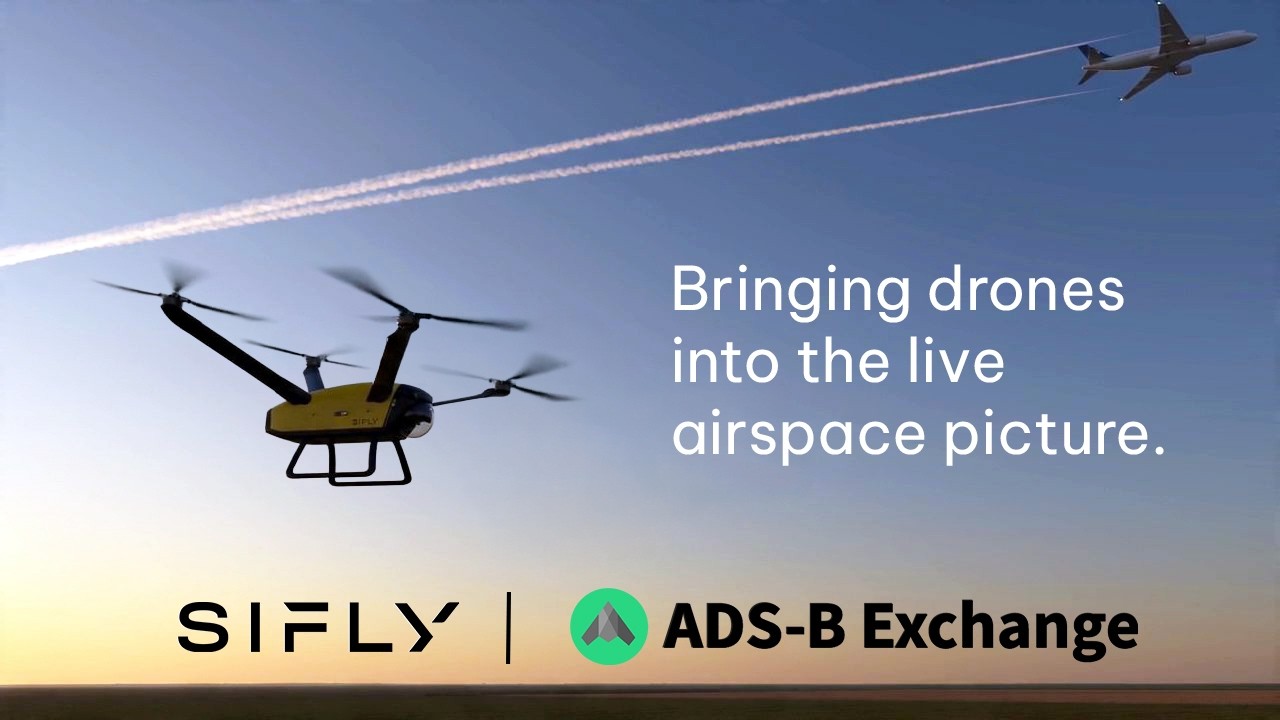
SiFly Aviation and ADS-B Exchange have unveiled a collaboration that brings a new layer of transparency to American skies by making SiFly Drone flights visible on one of the most widely used airspace tracking platforms. The announcement, delivered from Santa Clara, California, introduces a system where telemetry from SiFly’s cloud-connected Q12 aircraft feeds directly into ADS-B Exchange displays that pilots and observers already rely on to monitor crewed aviation.
The integration offers operators, pilots, and controllers a single consolidated picture of traditional aircraft and unmanned aircraft systems sharing the same slices of sky. According to the two companies, live flight operations have already been completed in which Q12 telemetry streamed into ADS-B Exchange airspace views in real time, proving the concept under actual conditions rather than inside a lab setting.
Why SiFly Drone Visibility Matters for Shared Airspace
SiFly’s Q12 is engineered for long-endurance missions, capable of remaining airborne for multiple hours and covering tens of miles in a single operation. That performance profile pushes these aircraft into airspace regions typically shared with crewed traffic, which raises the need for tools that let everyone see what is flying nearby. Without a shared awareness layer, uncrewed activity at that scale could slip past anyone using conventional tracking displays.
The new partnership closes that gap by placing the SiFly Drone fleet within the same visual feed pilots consult for cooperative aircraft. Situational awareness tools across aviation have historically been focused on crewed operations, so adding unmanned assets to the same display marks a meaningful shift in how airspace information is shared. Organizations using the platform can now see the full mix of traffic operating in a given area, which the companies describe as a unified view of crewed and uncrewed aviation.
“From the beginning, we set out to build an aerial system that unlocks a new concept of operations for drones, allowing aircraft to fly longer, cover larger regions, and operate as part of real aviation infrastructure. As those capabilities emerge, drones must become visible within the same airspace awareness tools used by pilots. Our partnership with ADS-B Exchange helps create a shared airspace picture across crewed and uncrewed aviation.” Brian Hinman, Founder and CEO of SiFly
How Cloud Telemetry Replaces Traditional ADS-B Broadcasts
Most crewed aircraft broadcast ADS-B signals using onboard radios that transmit position data directly to ground receivers. The SiFly approach takes a different route. The Q12 platform uses a secure cloud connection to share live telemetry, and that data stream is then surfaced on ADS-B Exchange alongside activity from conventional aircraft. The result is the same practical outcome, which is a drone icon moving across a live map during the flight, but the mechanism reflects the realities of modern unmanned aviation instead of legacy radio broadcast equipment.
This architecture also fits with how SiFly has been positioning its business more broadly. The company’s cloud-native approach underlies not only the ADS-B Exchange feed but other SiFly deployments that rely on the same remote coordination backbone to tie operations together. Reusing that infrastructure for airspace visibility means SiFly does not have to bolt new hardware onto its aircraft just to be seen, which keeps weight and complexity down while still giving observers reliable positional data.
Looking Ahead to Scalable BVLOS UAV Operations
The collaboration lands at a moment when the industry is preparing for formal unmanned traffic management frameworks, including FAA Part 108 and the proposed data service provider layers described under FAA Part 146. Many observers have assumed that large-scale integration of drones into the national airspace system would require complex new infrastructure that is still years away from being built and certified. The SiFly Drone deployment on ADS-B Exchange pushes back against that assumption by relying on tools already in service today, with live drone telemetry flowing into an established tracking network rather than waiting for a brand new stack to come online.
Unmanned aircraft are expanding into public safety, infrastructure inspection, and environmental monitoring missions, and each of those use cases pushes drones into airspace that also serves crewed operators. Greg Kimball, Chief Product Officer at ADS-B Exchange, framed the partnership as a response to that reality, saying the platform was built to deliver open, accurate, real-time visibility into global airspace activity and that integrations like this help support the safe entry of new aircraft types into shared skies.
For SiFly, which is headquartered in Santa Clara and builds US-made autonomous aerial systems, the integration demonstrates how a cloud-native drone architecture can plug into aviation infrastructure that predates the unmanned sector. For ADS-B Exchange, it extends the reach of a network already serving as a widely cited source of independent flight tracking data. Together the companies are making a case that scalable airspace integration can begin well before every regulatory piece is finalized, and the live flights already recorded under the arrangement offer early evidence that the approach works outside a controlled test environment.
