

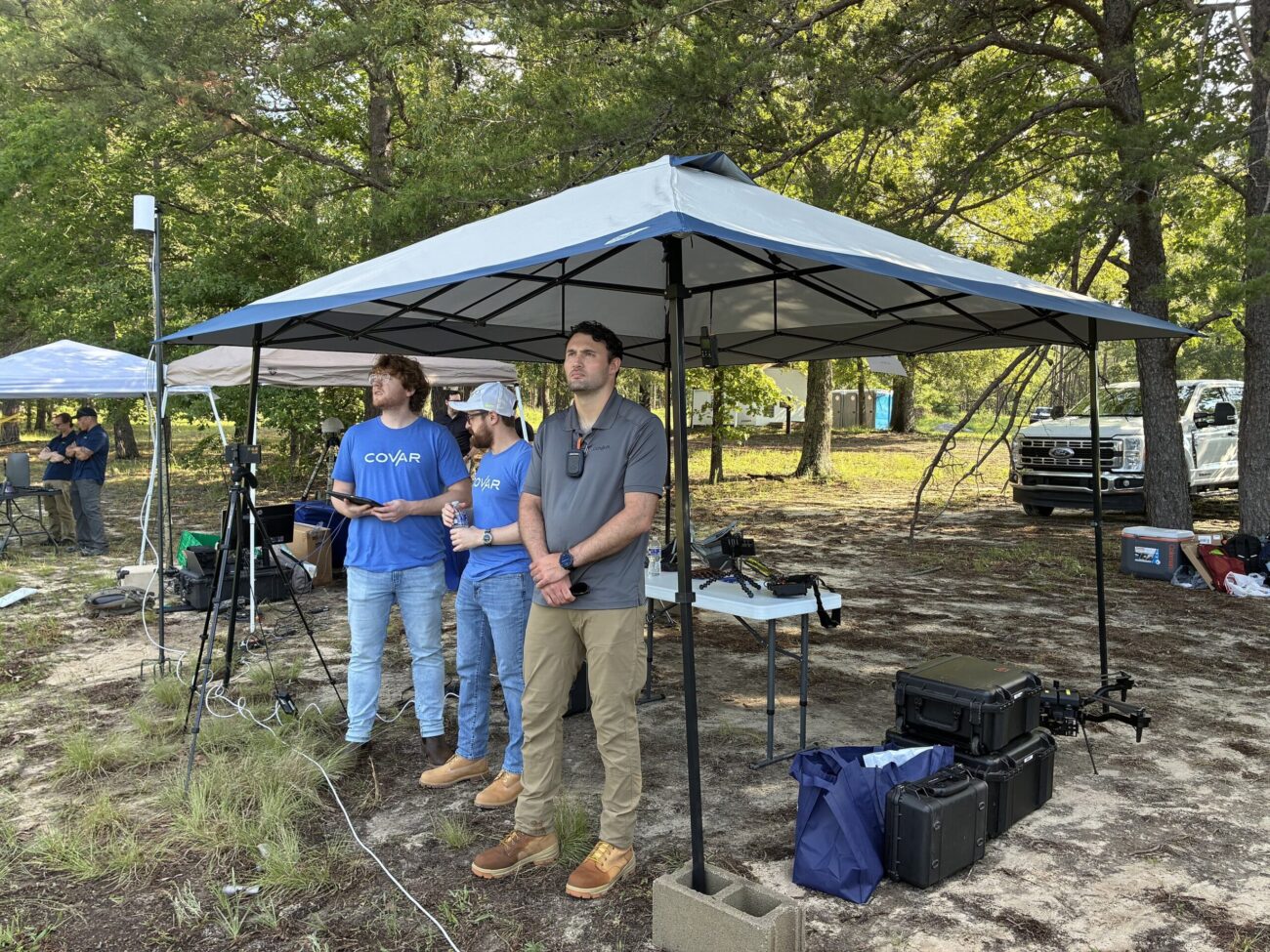
CoVar has demonstrated its BullsEye counter-drone capability at the U.S. Army’s Warden 2026 event, using the Android devices that Soldiers already carry to detect, track, and locate unmanned aircraft. Over the two-week demonstration, the BullsEye counter-drone system identified small unmanned aircraft system, or sUAS, threats from a single handset and from networked groups of devices, feeding target data directly into the Android Team Awareness Kit, known as ATAK.
The Durham, North Carolina company took part in the detection side of the mission and relied only on passive sensing through the built-in RGB cameras found on standard Android phones. That approach meant CoVar did not need to bring any dedicated counter-drone hardware to the field. Instead, the software worked with the camera, microphone, and computing power already inside the handset, turning everyday equipment into a tool that could spot drones in flight.
How the BullsEye Counter-Drone System Works
BullsEye is designed to turn commercial off-the-shelf Android devices, along with military-hardened versions such as Nett Warrior, into multi-function sensing and communication payloads. It runs on the hardware already present in the handset, including the camera, microphone, inertial measurement unit, onboard computing, and communications stack. Because of this, there is no separate artificial intelligence or machine learning box that a unit has to buy, integrate, maintain, or carry into the field. This design keeps the size, weight, and power burden on the Soldier low, since nothing new has to be powered or strapped on. The software can also be configured for any mission that calls for target recognition, not only drone defense.
A single device gives an operator a relative bearing and a track on a drone, shown either on the handset itself or inside ATAK. When several devices work together as a network, they triangulate to fix the absolute location of a target and push those positions into ATAK. This networked approach mirrors other recent work in drone detection, where connected sensors are used to pinpoint aircraft that a single tool would struggle to catch. The result is that a group of phones can build a shared view of the current threats in an area. Soldiers can therefore read a drone’s position straight from gear they already operate, without waiting for a separate system to come online.
What the Warden 2026 Demonstration Showed
Warden 2026 is a competitively selected, two-week demonstration where partners from government, industry, and research evaluate next-generation counter-small unmanned aircraft system solutions against live threats. Throughout the event, Army personnel flew a range of drones and drone swarms to stress both detection and defeat technologies. CoVar has positioned BullsEye, detailed among its core products, as software that adapts to many missions instead of a single fixed task. Across the two-week window, BullsEye worked against the mix of drones and swarms that the Army put in the air, and it successfully detected, tracked, and localized them.
“Counter-drone doesn’t have to mean one more piece of kit on a Soldier’s back. We took the device that’s already in their hands and taught it to find, track, and report the threat. At Warden we put that against real drones, in the field, and it delivered.” Dr. Joe Camilo, Vice President and Executive Lead of the BullsEye product line, CoVar
Warden is part of a broader Army effort to test counter-drone technology on a recurring basis and to move the systems that work into the field more quickly. The data gathered during the event helps the service evaluate new capabilities and decide where to invest next. CoVar said it will continue to mature BullsEye and pursue further chances to put it in Soldiers’ hands.
CoVar develops artificial intelligence, machine learning, and autonomy solutions for demanding national security missions. The company works with the U.S. military and the intelligence community to field trusted systems that can be deployed at the speed of the threat. Its showing at Warden 2026 placed that mission in a live setting, with real drones flying against the BullsEye counter-drone system in the field.
