

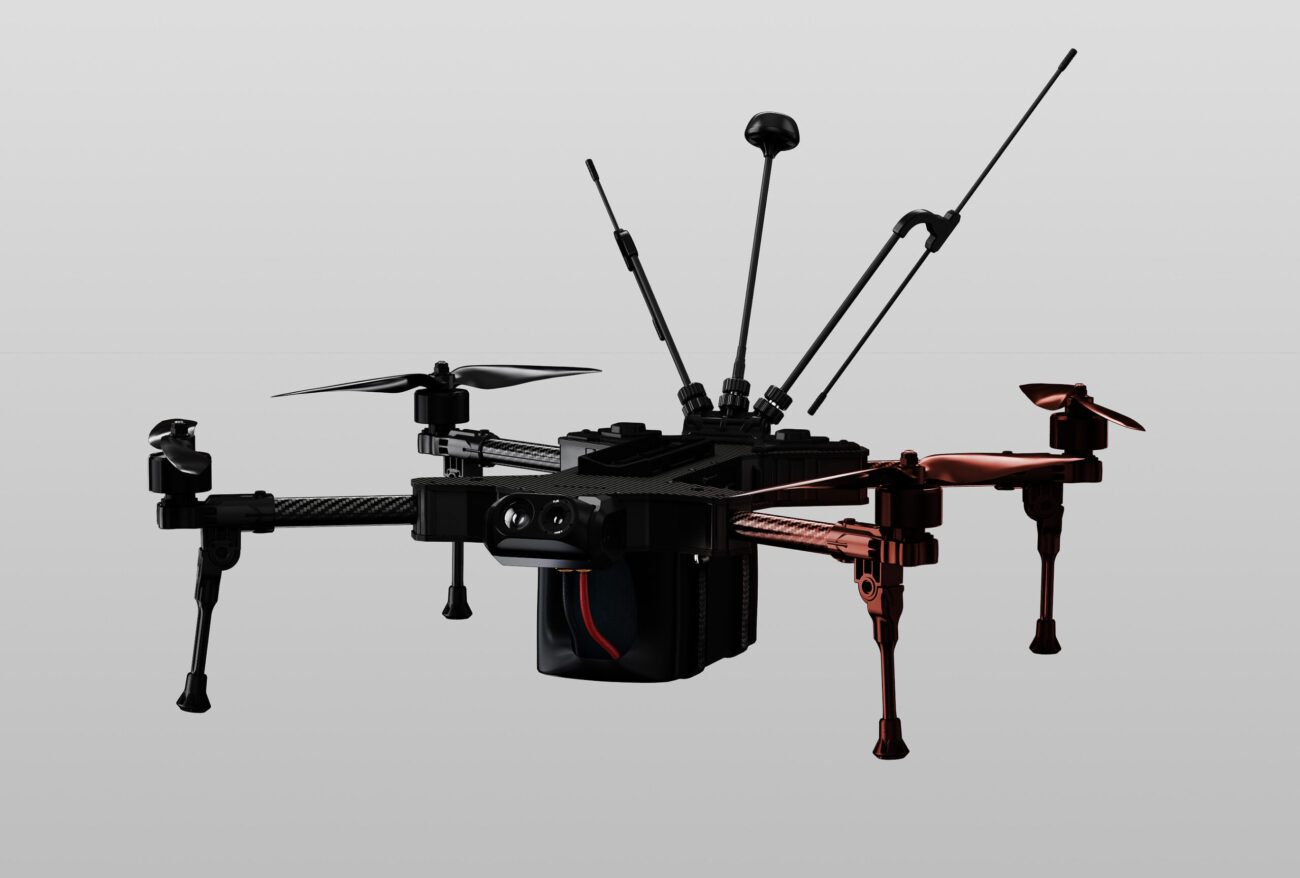
Orqa has launched the MRM2-10AI drone, a next-generation tactical platform built for contested battlefields and the realities of modern electronic warfare. The company, which describes itself as Europe’s leading developer and manufacturer of drones made without Chinese components, unveiled the system at Eurosatory 2026, the global defense and security event held in Paris. Orqa says the MRM2-10AI is designed to succeed in conditions where many conventional drones struggle, including heavy radio-frequency jamming, GNSS disruption, and direct electronic attack.
Armed forces around the world increasingly operate in airspace where signal jamming and satellite disruption have become routine rather than rare. Orqa built the MRM2-10AI drone around that reality, focusing on resilient communications, intelligent autonomy, and the ability to keep a mission moving even when links are under pressure. The result is a platform aimed squarely at military users who need dependable performance in environments that grow more crowded and more contested with each passing year.
Hybrid Communications Keep the MRM2-10AI Drone Connected
At the core of the platform is a hybrid communications architecture that pairs Orqa’s established IRONghost radio control system with native fiber-optic integration and automatic failover. This combination lets the aircraft use either link without any hardware reconfiguration, switching between them as battlefield conditions change. If the fiber-optic connection is broken, the system instantly transitions to the radio-frequency link, helping the drone stay under operator control during an active mission.
That redundancy is a direct answer to one of the biggest weaknesses of modern drones, their dependence on a single vulnerable communications channel. By giving operators two methods that can hand off automatically, Orqa aims to lower the chance that one point of failure ends a flight. For units operating in jammed or contested airspace, keeping a reliable connection open can be the difference between finishing a task and losing the aircraft, which is why resilient links sit at the center of the MRM2-10AI drone design.
“As the nature of warfare continues to evolve, drone operators require systems that can remain effective in contested spaces. The MRM2-10AI combines resilient communications, onboard intelligence, and autonomous capability in a platform designed to keep missions moving. It represents the next step in tactical drone capability for today’s armed forces.” Srdjan Kovacevic, Co-founder and CEO of Orqa
Onboard AI Powers the MRM2-10AI Drone in Contested Skies
The MRM2-10AI features a new Auto Pilot Board that unlocks a range of autonomous capabilities. Chief among them is vision-based terminal guidance for GNSS-denied operations, an approach that reflects a wider industry move toward GPS-denied navigation for aircraft that can no longer rely on satellite signals alone. This guidance lets the drone keep flying toward its objective even when satellite positioning is jammed or unavailable. The same board supports advanced computer vision, battlefield analytics, and collaborative operations involving several drones working together.
An onboard compute platform is ready to run customer-supplied or third-party AI models, giving operators room to load their own software and analytics. Orqa supports this with a fully open development architecture and a third-party Developer Program that provides a foundation for new AI capabilities and software solutions. The platform also offers ATAK compatibility, so it can plug into the battlefield management and situational awareness systems that many forces already depend on.
Orqa is offering the MRM2-10AI in several configurations to match different mission requirements, including variants with advanced thermal imaging and others with enhanced processing power for more demanding autonomous work. By placing the system in front of a global audience at Eurosatory 2026, the company is presenting it as its answer to the pressures facing tactical drones in an age of electronic warfare. For armed forces weighing how to keep their unmanned systems effective against jamming and disruption, the MRM2-10AI drone reflects Orqa’s view of where tactical drone design is heading.
