

The counter-UAS market is heading into a period of rapid expansion, according to a new report from research firm MarketsandMarkets. The study projects that the global market for systems built to counter unmanned aircraft will grow from USD 9.17 billion in 2026 to USD 29.70 billion by 2031. That works out to a compound annual growth rate of 26.5% across the forecast period, which makes counter drone technology one of the faster moving corners of the defense and security industry right now.
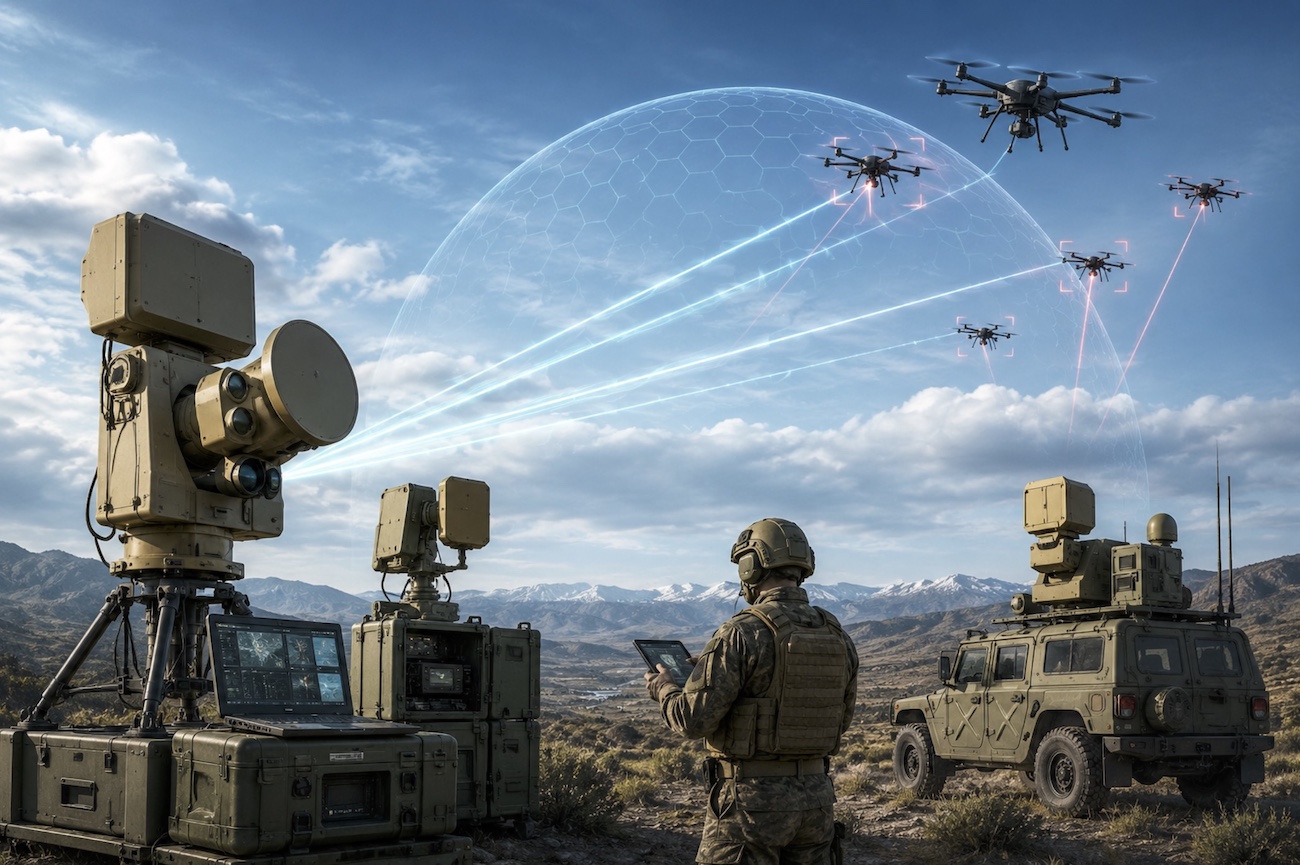
Counter-UAS systems, often shortened to C-UAS, are built to detect, track, identify, and stop unauthorized drones before they can cause harm. According to the report, these systems bring together radar, radio frequency sensors, electro-optical and infrared cameras, command and control software, and countermeasure tools in a single defensive package. They are being deployed at military bases, critical infrastructure sites, airports, public venues, and other sensitive locations, where they protect against surveillance attempts and other drone related security incidents.
Counter-UAS Market Fueled by Drone Swarms and Government Funding
One of the strongest forces behind the growth is the rising use of coordinated drone swarms. When several drones approach a protected site at the same time, defenders need equipment that can find and defeat multiple threats simultaneously, which puts real pressure on the counter-UAS networks that tie sensors, command systems, and operators together. The report says this challenge is pushing demand toward integrated setups that fuse data from many sensors through shared command and control technology.
Government spending is another major driver identified in the study. The full counter-UAS system market report, which runs 400 pages with 450 data tables and 100 figures, describes how governments are putting more money into the procurement, testing, and deployment of these systems to strengthen defense and homeland security capabilities. Long-term procurement programs, technology evaluations, and modernization initiatives are all helping push adoption of integrated detection, command and control, and mitigation systems across military and government security operations.
When it comes to technology, the conventional segment is expected to hold a larger share of the counter-UAS market in 2031 than the AI segment. Conventional systems built around established radar, RF detection, EO/IR sensors, command and control platforms, and electronic countermeasures are already widely fielded across military, homeland security, and critical infrastructure applications. Defense and security organizations continue to favor them because they offer proven performance and connect easily with existing air defense and security networks.
Mitigation Systems and North America Set the Pace for Growth
Among solution types, the UAS mitigation and neutralization segment is expected to post the highest growth rate through 2031. The spread of commercial, FPV, autonomous, and swarm drones is fueling demand for tools that can disrupt, intercept, or bring down unauthorized aircraft once they have been detected and identified. Defense and security organizations are expanding their use of electronic countermeasures, directed-energy systems, kinetic interceptors, and other mitigation technologies as part of larger C-UAS architectures covering military, homeland security, airport, and critical infrastructure settings.
The deployment picture is shifting as well. The vehicle-mounted segment is expected to record a 29.9% compound annual growth rate between 2026 and 2031, reflecting demand for counter drone protection that can move with forces and convoys rather than staying fixed in place. By region, North America is projected to be the fastest growing part of the counter-UAS market, with a 27.4% growth rate over the forecast period. The region is increasing investment in integrated capabilities that address drone threats across military operations, homeland security, border protection, airports, and critical infrastructure, while adoption of AI-enabled detection and multi-sensor command and control platforms continues to climb alongside ongoing defense procurement and modernization programs.
The report names RTX, Northrop Grumman, Lockheed Martin Corporation, Rheinmetall AG, and RAFAEL Advanced Defense Systems Ltd. as leading players in the field. These companies have leaned on strategies such as acquisitions and contracts to strengthen their positions as the market grows. With drone threats becoming more capable and more common, the race to defend the airspace above bases, borders, and public gathering places looks set to remain crowded and competitive through the end of the decade.
