

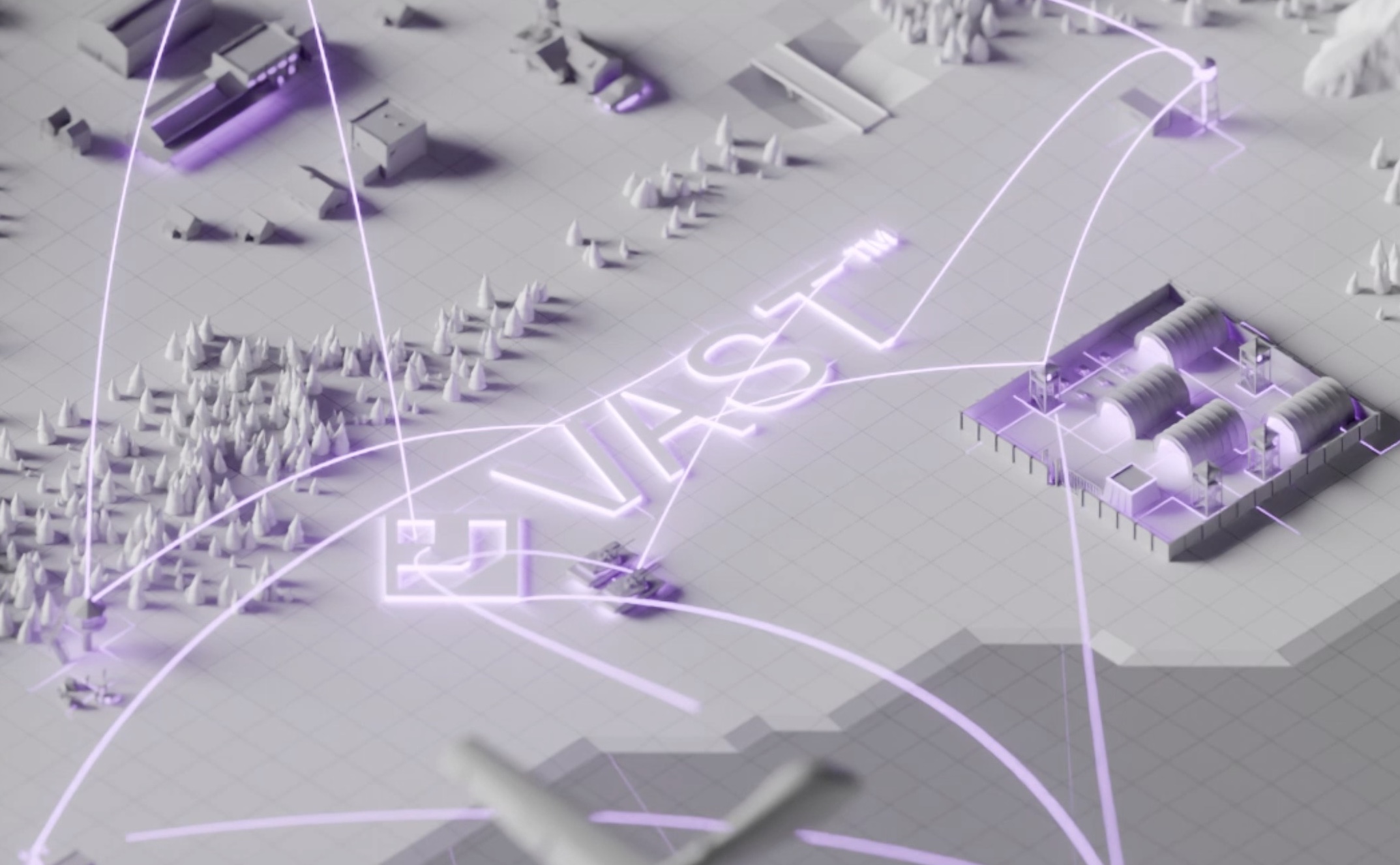
Counter-UAS networks are the focus of a new positioning statement from RMX Industries, which said its VAST video compression platform can serve as a transport layer for next-generation systems designed to detect, track, and defeat rapidly evolving small drone threats. The company outlined how video flow and network capacity can become limiting factors as sensor coverage expands across fixed sites, mobile units, and tactical edge environments.
RMX tied its announcement to Department of War funding and program activity described in the release, including a request of $3.1 billion for Counter-UAS projects in FY2026, congressional authorization of an additional $184.8 million for Counter-UAS interceptors, and the FY2025 NDAA establishing a dedicated Counter-UAS Task Force. The company also pointed to major awards and requirements it said illustrate the scale of sensor and effector deployment that must operate over constrained infrastructure.
Counter-UAS Networks Face Bandwidth Limits at the Tactical Edge
RMX described what it called a recurring operational constraint for counter-drone deployments, which is the ability to move usable video from sensors to the fusion engines and operators who need it. The company said modern Counter-UAS architectures depend on expanding arrays of sensors, including fixed cameras, electro-optical and infrared turrets, radars, small UAS, and passive radio frequency detectors feeding fusion engines and operators in real time. It also said legacy military networks were not designed for the volume and quality of video generated by these systems, particularly in contested, bandwidth-limited, or tactical edge environments.
“Every Counter-UAS system eventually hits the same wall: the network,” Karl Kit, CEO of RMX
In the same section, the release describes VAST as a way to make existing tactical and installation infrastructure viable for modern Counter-UAS operations by enabling more sensors to share more intelligence over constrained networks without degrading picture quality or overwhelming bandwidth. RMX said the pressure on networks increases as systems scale, because sensor growth can outpace the ability of existing links and infrastructure to carry high-fidelity streams reliably and quickly.
The announcement also cites defense procurement signals to frame the scale of the problem. RMX referenced the Marine Corps’ $642 million Installation Counter-UAS program awarded to Anduril and the Army’s requirement for 6,000 Coyote interceptors between FY2025 and FY2029. RMX also referenced a Drone Dominance Program described as a $1.1 billion initiative over four phases to rapidly field hundreds of thousands of low-cost, unmanned one-way attack drones by 2027, beginning with evaluations at Fort Benning on February 18.
Counter-UAS Networks Use Video Compression for Sensor Integration
RMX said VAST compresses and conditions video at the source so high-fidelity streams can traverse constrained radio frequency links, tactical SATCOM, and terrestrial networks without overloading infrastructure. The release lists multiple environments where VAST is intended to operate, including fixed installation cameras, mobile electro-optical and infrared systems, counter-drone UAS payloads, and vehicle-mounted sensors. RMX also described the platform as infrastructure agnostic and stated it can function across HF, VHF, UHF, SATCOM, MANET, and terrestrial networks.
The announcement describes several operational requirements VAST is intended to address for counter-drone deployments. These include multi-sensor integration across diverse sensor types, bandwidth efficiency with reductions of video data requirements by up to 50% while maintaining image quality needed for threat classification, tactical edge deployment as software on existing hardware or embedded into devices, and low latency intended to preserve sub-second response times in scenarios where operators have only seconds between detection and engagement. RMX also said the platform has been field validated in bandwidth-constrained military environments, including tactical radio networks, narrowband SATCOM, and contested radio frequency environments.
“VAST can run as software on existing hardware, on compact RMX edge appliances, or embedded directly into cameras, radios, and UAS payloads,” Karl Kit, CEO of RMX
RMX framed the platform as supporting rapid integration into emerging Counter-UAS architectures supporting installation protection, mobile defense programs, counter-swarm operations, and training programs. The company said the goal is to enable more sensors to share more intelligence over the same constrained networks without proportional increases in bandwidth costs or infrastructure overhaul. In describing its broader technology focus and positioning, RMX said it delivers data compression and video optimization solutions originally developed for defense and security applications to help capture, transmit, store, and deliver visual data across environments with varying bandwidth availability.

The company’s announcement positions network throughput and trusted video transport as a central factor in scaling counter-drone deployments. By focusing on video compression at the source and compatibility across multiple communications links, RMX said VAST is intended to support Counter-UAS networks as sensor coverage grows and as both defensive and offensive unmanned systems programs expand.
